When I read She Came to Slay, Erica Armstrong Dunbar's biography of Harriet Tubman for Black History Month, I learned about Tubman's great military achievement, the Combahee River Raid (1863). There is a non-fiction book about it listed in Dunbar's bibliography, but I was unable to obtain it through libraries, and purchasing it was beyond my current means. So when I was asked to list books that I'm reading for Women's History Month on a Goodreads group called Read Women, I selected a historical novel about the Combahee River Raid, The Tubman Command by Elizabeth Cobbs, as one of them.
I am particularly pleased to be reviewing a book about Harriet Tubman today because March 10 is the day assigned to Tubman in The Little Book of Feminist Saints by Julia Pierpont.
I read both history and historical fiction. I feel that each of them have their strengths. I was looking forward to getting a window into the mind of Harriet Tubman, and feeling the impact of her leadership role in a Civil War military operation through the pages of The Tubman Command.
Harriet Tubman was clearly a born leader who had a talent for planning and was a gifted speaker. She was also determined to achieve her goals, had tremendous courage and believed strongly that the visions she received were messages from God. Elizabeth Cobbs portrays her as a character with these traits, but also shows us her vulnerable side as a woman who wanted a relationship with a man. Her Tubman seemed wary of trusting men on an intimate level. Based on what I read about her in She Came To Slay, I think she had good reason to be untrusting.
A romantic possibility for Tubman is a sub-plot in The Tubman Command, but it isn't a major focus of the narrative. So I wouldn't call this a romance. It's mainly about a historic military operation that resulted in the rescue of 750 slaves.
The quote from Harriet Tubman in the title of this review is a fictional one from this novel. Harriet Tubman was illiterate. So she herself wrote no accounts of her life.
The Combahee River Raid was made possible because of Harriet Tubman's status as the leader of a team of Black scouts for the Union Army. The Tubman Command shows how Tubman persuaded the officers involved in decision making to support her plan. I felt that there was a great deal of suspense involved in its implementation even though I already knew the result.
In the midst of all this drama, there was also comic relief in the form of an unexpectedly funny scene involving the antics of Tubman's cat, who was appropriately named Trouble. I was charmed by this scene and was glad it was there.
The fictional elements of The Tubman Command didn't cause me to lose confidence in Cobbs' accuracy. There is a back cover blurb praising this book from Edda L. Fields-Black, an African American academic who has been working on a scholarly book about the Combahee River Raid that is forthcoming.
I found The Tubman Command moving, insightful and well-written. I thought it was also original because I had never read a novel dealing with this significant event. This is my first five star read of 2020. It will certainly be a candidate for my top ten of the year.
Showing posts with label American Civil War. Show all posts
Tuesday, March 10, 2020
Thursday, October 29, 2015
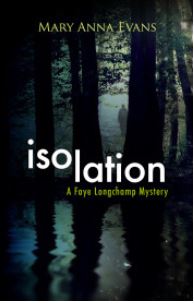
Isolation by Mary Anna Evans
I've been a fan of the Faye Longchamp mysteries by Mary Anna Evans for some time, but I've never blogged about any of them. This is the ninth book in the series. So it's about time that I did. These are contemporary mysteries that often have a strong historical element.
I think that Book Babe readers who haven't encountered Faye Longchamp should know about her. Faye is an African American archaeologist who first practiced archaeology by excavating Joyeuse, the island off the coast of Florida where she lived. By excavating on Joyeuse, she was uncovering her own family's heritage. Her family had lived on Joyeuse for generations. Isolation deals very directly with one of Faye's ancestors.
It starts out as a contemporary case. A woman who owns a bar has been murdered. At the same time, a man that is looking for the truth about a Civil War ancestor of his who disappeared, starts asking questions about a woman who was Faye's ancestor. This particular ancestor is significant to Faye. So that's when this mystery starts getting very personal. Faye discovers that everything she loves may be in jeopardy. She will end up having to fight for her family, and for her life on Joyeuse. Books don't get more dramatically intense than this. Mary Anna Evans pulled out all the stops in Isolation.
The strength Faye exhibits is more astonishing because the novel opens with Faye having been depressed for some time over a miscarriage. She isolates herself while she grieves over the loss of her baby. The level of threat that she experiences over the course of the narrative, snaps her out of it. She becomes herself again. A woman who is weak would have no resources to call upon, but Faye is a hero.
One of male heroes in this novel who fights alongside Faye is her husband, Joe Mantooth. Joe is a Native American flintnapper. Flintnapping is a stone age skill. Very few people in the current day practice flintnapping. He is also an expert consultant on flintnapped artifacts for archaeologists. I think this makes him a pretty amazing man. Flintnapping doesn't play a role in Isolation, but I wanted to introduce readers of this review to Joe. He's central to both this book and to Faye's life. I always imagine that Joe looks like the actor Joe Lando as he appeared on the TV show, Dr. Quinn: Medicine Woman where he played the role of Sully. I imagine that Faye looks like the actress Halle Berry. Faye and Joe make an extraordinary couple.
It would be possible to read Isolation without reading the rest of the Faye Longchamp series, but you would probably be better off getting all the background by starting off with the first book, Artifacts. Live through Faye's adventures as Mary Anna Evans wrote them.
Labels:
American Civil War,
Archaeology,
Book Reviews,
Flintnapping,
Mysteries
Monday, June 8, 2015
Balm: A Post Civil War Novel of Healing Review and Giveaway
About Balm
• Hardcover: 288 pages• Publisher: Amistad (May 26, 2015)
The New York Times bestselling author of Wench—called "a fascinating and tragic story" by NPR.org, "deeply moving" by USA Today, and "lyrical and devastatingly beautiful" by People magazine—returns to the Civil War era to explore history's next chapter in this powerful story of love and healing.
The Civil War has ended, and Madge, Sadie, and Hemp have each come to Chicago in search of a new life.
Born with magical hands, Madge has the power to discern others' suffering and ease it, but she cannot heal her own damaged heart. To mend herself and continue to help those in need, she must return to Tennessee to face the women healers who rejected her as a child.
Sadie can commune with the dead, but until she makes peace with her father, she, too, cannot fully engage her gift.
Searching for his missing family, Hemp arrives in this northern city that shimmers with possibility. But redemption cannot be possible until he is reunited with those taken from him.
In the bitter aftermath of a terrible, bloody war, as a divided nation tries to come together once again, Madge, Sadie, and Hemp will be caught up in an unexpected battle for survival in a community desperate to lay the pain of the past to rest.
Beautiful in its historical atmosphere and emotional depth, Balm is a stirring novel of love, loss, hope, and reconciliation set during one of the most critical periods in American history.
REVIEW
I’ve read books dealing with slavery and the emancipation of
the slaves after the American Civil War. I’ve read books
dealing with traditional herbalists from a variety of cultures. I’ve also read
books that deal with trance mediums who can contact the spirits of the dead.
Yet I’ve never read a book that focused on all three of these themes. Balm by
Dolen Perkins-Valdez is that book. I
received two copies of this book for free in return for this review. They are a
paperback ARC directly from the publisher, and a digital ARC via Edelweiss.
Because I have two copies, I decided to give away the copy
of the print version to a lucky reader. Scroll down for the
Rafflecopter Giveaway.
The slavery and emancipation theme was movingly portrayed
through the perspective of Hemp Harrison.
Since he found his slave name demeaning, he decided to name himself
after the crop at the plantation where he was a slave followed by the surname
of his former owner. I have often
wondered why emancipated slaves chose to identify with slave owners. Hemp actually had an important reason. He was trying to reunite with his wife who
had been sold away. He had no idea where he would find her. Hemp thought that his name might be a way for
his wife to recognize that it was him searching for her. A great many slaves were in his situation
after the Civil War. Dolen
Perkins-Valdez depicts the affliction of separated African-American families
through Hemp’s story.
Madge, an African American woman who was born free, was the
herbalist. She was brought up in a
family of rootworkers who made their living as healers. Herbalists were often suspected of practicing
witchcraft. Madge did have a paranormal
gift that facilitated her diagnosis of the conditions of her patients. She wanted independence and a successful
career, and she was confident that she could achieve these goals. Yet something was missing in her life, and it
took her some time to discover what that was.
The medium who heard the voices of the dead was Sadie, a
white Civil War widow. I was
particularly impressed by the fact that Sadie’s talent was genuine. I’ve read many books dealing with fraudulent
mediums who are eventually exposed. I
find that story line predictable and formulaic.
Sadie had to deal with the voice of a dead man who sometimes came to her
involuntarily without being summoned.
She had to struggle to reclaim her freedom from that voice. She was in a state of inner conflict about
her mediumship. I appreciated the
complexity of Sadie’s characterization.
Sadie decided to
employ Madge as a servant. The
relationship between the two women was unsentimental and honestly
portrayed. So if you’re looking for a
novel about a heartwarming friendship that transcends the post-slavery rift
between the races, Balm is not that book. I'm glad it isn't that sort of book since I don't subscribe to the delusion that two women could somehow cut through centuries of prejudice within a single generation.
This is a book that is primarily about healing. It's about the slow process of healing from the wounds of slavery, divided families and the mental anguish that resulted from these experiences. I am grateful for the artistry of this author that allowed her to shape a tale of three individuals that is also the story of the beginning of America's emergence from a terrible time in its history.
Purchase Links
|
About Dolen Perkins-Valdez
Find out more about Dolen at her website, and connect with her on Facebook and Twitter.
a Rafflecopter giveaway
Subscribe to:
Posts (Atom)