Showing posts with label Mysteries. Show all posts

Monday, May 25, 2020

Hello Summer--Contemporary Woman Journalist Investigates Congressman's Death

I've never read mysteries by either Mary Kay Andrews or Kathy Hogan Trochek. Mary Kay Andrews is a pseudonym for Trochek.  Her Goodreads profile says that she established the pen name for books that would be more Southern oriented. Trochek lives in Atlanta, Georgia.

I was approached by publicist Meg Walker with a review request for Hello, Summer, the most recent Mary Kay Andrews novel.  The female journalist protagonist was what drew my interest. I appreciated that Trochek had been a journalist herself before beginning her career as a novelist. This meant that I could expect an authentic portrayal of the protagonist. The author gave her protagonist her own journalistic background.  They both had worked at The Atlanta Journal-Constitution.  I think that these shared circumstances increases the reader's confidence in the book's realism.

On this blog, I recently reviewed a book dealing with the real historical journalist, Nellie Bly here but I also reviewed The Suffragette Scandal, a romance by Courtney Milan in which the heroine was a fictional historical journalist  here.

Journalists play an important role in society. So I like to highlight them.  That's why I decided to accept the review request.  I received two print copies from the exceedingly generous publisher, St. Martin's Press.  My review is below.


From a mystery perspective, readers will need to be patient. There is a great deal of development of the characters and their relationships before the case gets going.  The mystery does get solved though the resolution isn't conventional.

Although there is a romance element in this novel,  it doesn't dominate the plot.  I read a review on Goodreads that complained that there was too little romance and too much politics.  I personally liked the balance of all the various aspects in  Hello, Summer within the narrative.

Readers of this blog will want to know that there were two wonderful woman characters in this novel in addition to protagonist Conley Hawkins.

 My personal favorite was her grandmother's housekeeper, Winnie.  Her strength in the face of  environmental injustice impressed me tremendously. I would have loved a novel in which Winnie was the protagonist in which we got to see her entire history as she experienced it. I suppose it would have been an environmental thriller.

Conley's eccentric grandmother was incredibly supportive of Conley's insistence on investigating stories regardless of who they offended.  She had inherited the ownership of a local newspaper, and it was she who upheld its journalistic standards.

 Conley brought valuable experience to her family's newspaper, The Silver Bay Beacon, from her work at The Atlanta Journal-Constitution.  She had reason to believe that the risks she was taking could make The Silver Bay Beacon more successful despite her sister's skepticism.

 I'm hoping that there will be another novel taking place in Silver Bay in which we get to see whether Conley's strategy paid off in the long run. Do local print newspapers have a future?  I'd like to think that they do.


Sunday, August 13, 2017

The Exiled: Anna Fekete Demands Justice In Serbia

The Exiled by Kati Hiekkapelto is the third in a series of mysteries dealing with police detective Anna Fekete who lives and works in Finland.  In this book, she goes home to see her family in Serbia and encounters murder in Kanizsa, her home village.  I won this novel in a Goodreads giveaway in 2016. It is the last of  five Goodreads giveaway wins from last year.  I have finally gotten it read while it's still  Women in Translation (WIT) month. Kati Hiekkapelto originally wrote this book in Finnish.  For more information about WIT month see an interview with the Israeli woman scientist who originated it here .


This is the first novel I've read in this series, but my perception is that Anna Fekete is not a noir detective.  She believes in values that are considered old fashioned in the 21st century like integrity and justice.  The violence in this novel also isn't on the level of the really dark Scandinavian noir that I've read.  There are no stomach churning details.  Although there is 21st century cynicism and corruption on the part of the local authorities in Serbia, I would call this noir lite, and I definitely prefer that. I hate finishing a book feeling totally disgusted as happens with most noir.

I was also glad to see a woman who wouldn't back down no matter how many people told her not to investigate the death of the man who stole her handbag.  It seemed to me that she's a rare woman. Someone else wouldn't have cared about the death of a thief--especially when the thief had stolen from her.  He was Romani and Anna thought he deserved justice.    Anna relied on the assistance of her loyal friend, Reka, a local journalist who gave her information and contacts.  Another woman that I really liked in this novel was Judit, a Romani community leader.

The parallel between Romani in Serbia and African Americans in the United States was very clear in The Exiled.  Romani lives didn't matter.  Whites in Serbia made the exact same sort of  contemptuous comments about Romani as white racists tend to make about African Americans in the U.S.   The people in Anna's village were Hungarians, an ethnic minority in Serbia.  They didn't like it when the government of Serbia discriminated against them, but too many of them looked down on Romani and considered them worthless.

Anna reflected about the village where she was born, and wondered about what home meant.   Could she really feel at home with people who didn't share her values?  I identified with Anna's inner struggle over this issue. 

The current massive refugee problem is part of the background of The Exiled .  The same people who denigrate Romani were equally prejudiced against refugees.  Anna went to the refugee camp with the village's Orthodox priest to see if she could help them.  

The genuinely decent woman protagonist, and her fight against both bigotry and corruption gave The Exiled stature.   It's a cut above the usual mystery.  I look forward to reading the next in the series when it becomes available in English.   


Saturday, June 10, 2017

The Pearl Thief

I've read two books by Elizabeth Wein dealing with female pilots, and reviewed one of them on this blog here.  Female pilots are a focus of  this blog. Wein created some memorable women and girls flying planes in  Rose Under Fire  and Black Dove, White Raven.

 I do need to point out that Julie, the central character of The Pearl Thief , isn't a pilot.  She's the spy protagonist of Wein's Code Name Verity which I didn't read because it was written in a way that didn't hold my attention.  There's supposed to be a movie in development.  If this film ever manifests, I suspect I will like it better than the book.

The Pearl Thief  is a prequel about Julie's early life in Scotland.  So why would I want to read the prequel to a book I didn't even like, and why would I think the review should be posted to Flying High Reviews?   You'll have to read my review to find out the answer to these questions, but I'll tell you right now that I did read every wonderful page of The Pearl Thief.


The main reason why I wanted to read The Pearl Thief is because British Travellers are prominent in the plot.  Travellers are often confused with the Romani who are now believed to have originated in India.  Travellers are native to Britain.  They were also called Tinkers because they mended pots and kettles, but the term Tinker was used as an insult.  Elizabeth Wein serves up intriguing snippets of the history and culture of Travellers in this novel.  I'd love to find out more.
 
Yet this blog is supposed to center on strong female characters.  Are there any in The Pearl Thief ?  You bet! First and foremost is the Traveller girl, Ellen who braves prejudice and abuse whenever she tangles with people in authority.   She's also fiercely loyal to her family.   Another strong female character is Ellen's dog Pinky who also exhibits bravery in the face of any threat to Ellen. Julie is willing to challenge convention by calling Travellers friends and defending them.  She also occasionally dressed in a man's kilt and was mistaken for a boy.

Another reason why I wanted to read this latest book by Wein is that it's a mystery beginning as a missing person case.   I am a fan of the mystery genre and this one involves several surprising twists. So this is an absorbing and well constructed mystery with great characters and a strong statement against prejudice.  I expect this to be one of my best reads of 2017.


Sunday, March 26, 2017

The Poison in All of Us--A YA Historical Mystery of a Murdered Suffragette

Connie B. Dowell, the author of  The Poison in All of Us, had me at the word "suffragettes" in the description.  I love reading about suffragettes.  It's one of the things that Tara and I have in common.   So I accepted a free copy of Dowell's novella in return for this honest review.


 The Poison in All of Us takes place in a small town the year before the 19th amendment to the U.S. constitution was ratified by enough states to make women's suffrage the law of the land.  The fictional town of Cora, Georgia was deeply divided on the issue. The women's club voting in favor of women's suffrage plunged this community into what seemed like an escalating spiral of violence which began with the murder of Miss Letty, the leader of the pro-suffrage faction.

The protagonist, Emmie McAllister  is a gutsy and outspoken young woman whose main ambition as the book opens is to buy a motorcycle.   Women riding motorcycles are as fascinating to me as suffragettes which is why Tara's Ride For Rights is one of my favorite books.  So Emmie on her Harley went a long way toward getting me to accept her penchant for taking foolish risks.  I just hope she'll grow out of that tendency over the course of the series.

Dessa, who joins Emmie in investigating the murder,  is practical, cautious and analytical.   There were numerous times when I wondered why Dessa wasn't the protagonist because she noticed things that Emmie didn't.  This made her a superior investigator.   On the other hand, sometimes someone who is investigating a murder needs to be brazen, to take actions that no one expects or to be able to respond quickly to events on her handy motorcycle.  So Emmie and Dessa would make a good team if they weren't antagonistic frenemies for a good part of the narrative.   Their relationship does evolve when Emmie learns more about what motivates Dessa.   I have to say that once Dessa's circumstances are fully revealed, I considered her a more sympathetic character than Emmie.

So what is "the poison in all of us"?  I believe that it's the prejudice that divided the town of Cora.   The animus against women's suffrage didn't end in Georgia for quite some time.  Dowell reveals in her author's note that Georgia didn't ratify the 19th amendment until 1970!

The Poison In All of Us is a suspenseful mystery that also makes strong statements about societal divisions and political corruption.


Friday, November 27, 2015

Point of Honour--A Swordswoman Solves A Mystery in an Alternate Regency Novel

I'd been meaning to read the Sarah Tolerance mysteries written by Madeleine E. Robins for some time.  It was a Goodreads recommendation that caused me to finally start Point of Honour, the first in the Sarah Tolerance mysteries.  It was an obvious choice for me since it was about a woman who knew how to use a sword.  I can't resist books about swordswomen.   I began reading it on Thanksgiving as a holiday treat that I knew I would enjoy.


Sarah loved swordplay as much as I do.  She was a daughter of English nobility and wasn't supposed to learn how to use a sword, but  she fell in love with her brother's fencing instructor and ran away with him.   They lived together for many years in exile from England, and he taught her everything he knew.  All of this happened before the book started, so these aren't spoilers.   This is Sarah's background.    Her family had disowned her.  This meant that when she returned to England after the death of her lover, she had to figure out how to make her own way in life.

In the context of Regency England, she was a "fallen woman" and would have been expected to join what is often called "the world's oldest profession".   So she created her own alternative, and Madeleine Robins created an alternate continuity  in which a woman like Sarah Tolerance could exist.

A GR friend that I respect very much complained about the way Regency England had been altered in her review of this novel.  I found that I disagreed with her.   I think that if an author is ignorant about the historical period in which the novel takes place and makes errors due to lack of research, that's inexcusable.  Yet when an author deliberately creates a different continuity and discusses it in an Author's Note, that's alternate history which is a sub-genre that I enjoy.

The main difference between this Regency England and the one we know is that the Regent is the Queen, the wife of the mad King George III.   There are other small changes that make the social landscape a bit more friendly to an independent woman.   One example is that she can join a gentleman's club that accepts women so long as they can afford to pay the membership fee.   This doesn't mean that Sarah doesn't encounter prejudice.   She is insulted and disrespected nearly every day, but she manages to maintain her self-respect.

Sarah invented a profession that didn't exist in 1810 when the events of Point of Honour take place. She called herself an investigative agent.  In our contemporary world we call them private investigators or detectives.  In our world, Eugène-François Vidocq became the first private detective in 1833.  For more information about Vidocq see the Wikipedia article about him.

The case that Sarah is hired to investigate in this first novel doesn't sound very interesting.  She is expected to find a fancy jeweled fan that an Earl had in the past given to his mistress. The case turns out to be far more complicated and dangerous than Sarah had ever imagined.  There are a number of swordfighting scenes for readers who are swordplay fans.   

Sarah Tolerance is a wonderful character.  Her skills, her loyalties and her principles are all tested in this book, but she is spirited, resilient and always a woman of integrity in a world where a woman who has lost her virginity is believed to have no honour.

Even though there are only two more books to read in the Sarah Tolerance series,  I think that this protagonist is going to be a new favorite of mine.   Perhaps in the later installments, she will become more respected and recognized.


Thursday, October 29, 2015

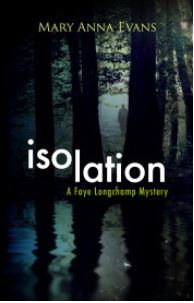
Isolation by Mary Anna Evans

I've been a fan of the Faye Longchamp mysteries by Mary Anna Evans for some time, but I've never blogged about any of them. This is the ninth book in the series.  So it's about time that I did. These are contemporary mysteries that often have a strong historical element. 

I think that Book Babe readers who haven't encountered Faye Longchamp should know about her.   Faye is an African American archaeologist who first practiced archaeology by excavating Joyeuse, the island off the coast of Florida where she lived.  By excavating on Joyeuse, she was uncovering her own family's heritage.  Her family had lived on Joyeuse for generations.  Isolation deals very directly with one of Faye's ancestors.


It starts out as a contemporary case.  A woman who owns a bar has been murdered.  At the same time, a man that is looking for the truth about a Civil War ancestor of his who disappeared, starts asking questions about a woman who was Faye's ancestor.   This particular ancestor is significant to Faye.  So that's when this mystery starts getting very personal.   Faye discovers that everything she loves may be in jeopardy.  She will end up having to fight for her family, and for her life on Joyeuse.   Books don't get more dramatically intense than this.  Mary Anna Evans pulled out all the stops in Isolation.

The strength Faye exhibits is more astonishing because the novel opens with Faye having been depressed for some time over a miscarriage.   She isolates herself while she grieves over the loss of her baby.   The level of threat that she experiences over the course of the narrative, snaps her out of it.   She becomes herself again.  A woman who is weak would have no resources to call upon, but Faye is a hero.

One of male heroes in this novel who fights alongside Faye is her husband, Joe Mantooth.  Joe is a Native American flintnapper.  Flintnapping is a stone age skill.   Very few people in the current day practice flintnapping.  He is also an expert consultant on flintnapped artifacts for archaeologists.  I think this makes him a pretty amazing man.  Flintnapping doesn't play a role in Isolation, but I wanted to introduce readers of this review to Joe.  He's central to both this book and to Faye's life.  I always imagine that Joe looks like the actor Joe Lando as he appeared on the TV show, Dr. Quinn: Medicine Woman where he played the role of Sully.   I imagine that Faye looks like the actress  Halle Berry.   Faye and Joe make an extraordinary couple.

It would be possible to read Isolation without reading the rest of the Faye Longchamp series, but you would probably be better off getting all the background by starting off with the first book, Artifacts.  Live through Faye's adventures as Mary Anna Evans wrote them.


Friday, September 4, 2015

Run You Down: Dramatically Intense Sequel to Invisible City @juliadahl

I reviewed the debut mystery Invisible City by Julia Dahl on this blog.  It took place in the hasidic community of New York who call themselves haredi. I said in my review of the first book that I wasn't that impressed with the journalist protagonist Rebekah Roberts, and that I wished that I was reading the story of Aviva Kagan, Rebekah's mother.  Well, I got that wish.  The sequel, Run You Down, alternates between the perspectives of Rebekah and Aviva.


This book is full of tragedy, but you could almost call the murder that Rebekah is investigating a poignant footnote to the heart-rending story of Rebekah's uncle, Samuel Kagan.  Sam is the dramatic center of the book.  I was very sorry for Sam.   I understood that he was largely shaped by PTSD, and that his trauma motivated his behavior.  Yet at the same time, it was hard to view him as a sympathetic character because some of his actions were so shockingly unthinkable.

Aviva was an important character, but largely secondary within the plot.  Her self-punishing guilt kept her away from the people she cared about most.  Yet Aviva was really a victim of her upbringing.    As much as she tried to combat it, being a member of the haredi community was too much a part of her. 

Dov Lowenstein, a disaffected ex-haredi who appears briefly in Run You Down, calls the haredi a cult.  This would explain why Aviva and others found it so difficult to leave.  What is the definition of a cult?  Neopagan author Isaac Bonewits developed a Cult Danger Evaluation Frame originally published in his book, Real Magic.  Its original purpose was to allow Neopagans to determine whether any particular religious group that they might come across was a dangerous cult.  If a group's  practices involves a high number of the characteristics that Bonewits listed, it's best to stay far away from it.  It is possible to conclude from what is written about the haredi in Julia Dahl's books that they are a cult.  Others might maintain that they preserve traditions, and are a source of social cohesion for their community.

I thought that Rebekah improved in this book, but she may be too vulnerable to be a successful journalist.  The ugliness of the crimes that she has investigated disturbs her very deeply.  At one point in this novel she reminds herself that being a reporter is what she aspired to do, but then comments "Maybe one day living my dream won't make me feel sick."

Run You Down is a powerful piece of fiction.  It also completes the Rebekah and Aviva character arc.  So if Julia Dahl continues with the series, she will need to find a new direction for Rebekah.  Perhaps additional professional training would be advisable for this character.


Tuesday, July 21, 2015

Invisible City-- Hiding Homicide Among The Hasidim @juliadahl

If I read an award winner or nominee, it's usually a remarkable coincidence.  I don't read books because they've been nominated for awards.  I've learned from experience that award winning books are rarely the kind of books that I want to read.  This applies to award nominated mysteries.  I don't care for the extremes in the mystery field--noir and cozies.  The awards are dominated by these polarized trends , and I prefer my mysteries somewhere in between.   I want realism, but I don't want the deep despair of noir.  I like sympathetic protagonists but I don't want the saccharine sentimentality that I find in the mysteries that are marketed as cozies. 

Invisible City by Julia Dahl was nominated for an Edgar in the first novel category.  It's somewhat grimmer than the mysteries I tend to like, but I was intrigued by the background of the protagonist, reporter Rebekah Roberts.


   Rebekah was brought up by her Christian father, but her mother, Aviva Kagan,  had come from the hasidic Jewish community and left it behind. Apparently, she was ambivalent about this decision because she soon left her daughter behind as well.   Ambivalence about my Jewish heritage is a situation that I identify with and understand.

The hasidic community call themselves haredi.  This literally means "those who fear" in Hebrew.  The implied connotation is that they are those who fear God. Yet it seemed to me that Dahl does portray haredi as generally fearful.    Their distinctive 19th century Eastern European dress makes them the most visible Jews and a special focus of prejudice.  Prejudice is catalyzed by fear of what is considered strange and unfamiliar.  Closed off communities like the haredi tend to cultivate their unique identity as a survival strategy. So the haredi are insular because they are afraid of the outside world, but those in the outside world who are most inclined to attack them are afraid of how different they are as a result of their insularity.  Fear begets more fear.  Fear was the reason why the haredi tried so hard to conceal murder in this book.

Invisible City centers on the killing of Rivka Mendelssohn which might easily have become an anonymous crime statistic in New York City.  The victim was a warm outgoing woman who wanted to help people.  She also strongly supported the rights of individuals to choose how they live and what they believe which ran completely counter to the haredi ethos.

There were a number of  characters in this book who were alienated by the lack of freedom among the haredi.  The most indelible are Rivka Mendelssohn and Aviva Kagan who never actually appear, but are nevertheless vividly portrayed through the memories of the people who knew them.

 Saul Katz is another of these disaffected characters, and he is very prominent within the storyline because his community contacts were invaluable for Rebekah Roberts.  In fact, without Saul Katz Rebekah wouldn't have gotten anywhere with her efforts to find out the truth about Rivka Mendelsson's death.   Saul is a compelling character, but Rebekah's unquestioning trust in Saul shows her naivete.

Frankly, I didn't think much of Rebekah.  I'll grant that she's young and new to journalism. Yet I wondered how it was even possible for her to become a stringer for a newspaper in a major market which would be highly competitive.  She should have needed to start her career in a smaller market like Oshkosh or Juneau. She also made mistakes that even a beginner shouldn't have made.  Having anonymous sources that need to be protected is one thing, but having anonymous sources because the reporter forgot to ask who they were is just incompetent.  I can understand why the author chose  Rebekah as the viewpoint character.  So much information that readers might need to know had to explained to her.  Yet she totally lacked professional credibility.   She does learn from her mistakes and presumably will be much improved in the sequel.  In Invisible City, I didn't find her interesting and wished that I was reading her mother's story rather than hers.

Still it was a good mystery.  I kept reading because I identified with Rivka Mendelssohn, and wanted to see justice done in her case.


Monday, July 13, 2015

Six and a Half Deadly Sins by Colin Cotterill

Six and a Half Deadly Sins is the most recent book in a mystery series that takes place in Laos in the 1970's.  If historical fiction is defined as fiction taking place at least fifty years ago, then this series doesn't meet that criterion.  The central character, Dr. Siri Paboun, is one of the more memorable mystery protagonists.  I've loved him ever since he debuted in The Coroner's Lunch which is still my favorite book in the series.   At the beginning of the series he was drafted to become the coroner of Laos.  There was no one else who was qualified.  At this point, he's retired from the position.  Yet Dr. Siri continues to involve himself in murder cases along with his remarkable wife, Madame Daeng.

                                               22889890      

The title of this book is a pun.   In Lao a traditional handwoven skirt is known as a pha sin.  Dr. Siri received a sin with a grisly surprise sewn into it.  This sent him, his friend Civilai and  Madame Daeng to the North of Laos where the sin had been made to investigate further.  He traveled from place to place being given sins with more clues.   Clues to what?  The case is very slow to develop.  We don't learn exactly what Siri is investigating until close to the end of the novel.  A group of very courageous woman weavers had no other way of exposing a killer who terrified everyone in the region.

Unfortunately, the slowness of plot development is a serious problem.   Most of this book had little going for it beyond witty dialogue.  Southeast Asia was in tremendous upheaval during the course of this novel, and we are told about these events.  Yet very little actually happens in the narrative until we finally find out what's really going on in Northern Laos.  Once the plot gets going there is a great deal of suspense and some clever twists, but it's all backloaded toward the end of the book.

 By the way, don't cross Madame Daeng.   She's quite an action figure for an old lady.  There's lots of life in the old girl yet.

So I liked the book by the time I finished it, but 75% of this book had far too leisurely a pace.


Wednesday, June 17, 2015

Rock With Wings by Anne Hillerman

I'm one of those people who continues to read a series that's been taken over by another writer after the death of the original author if I liked the series.  I sometimes think that the new writer is an improvement.

Anne Hillerman, the daughter of Tony Hillerman, is an improvement when she writes the perspective of Jim Chee's wife, Bernadette Manuelito.   Bernie, as everyone calls her, is a Navajo Tribal Police officer like her husband.  As a feminist,  I'm always hoping to see a woman officer being portrayed as the equal of male officers in police procedurals.  Most police procedurals have male protagonists. That's why I've been pleased by Anne Hillerman's primary focus on Bernie's perspective.


One of the problems that I had with this book is that it seemed to me that Chief Largo was deliberately giving Bernie minor cases while Jim Chee got the high profile action.  I think that the Chief was trying to protect Bernie, but she ended up in a dangerous situation anyway and acquitted herself well.  So Anne Hillerman was really showing that Bernie could handle danger, but I was impatient with all the minor cases that got piled on Bernie.

I also disliked the fact that Anne Hillerman felt the need to pander to the popularity of zombies.  The case that Jim Chee was investigating involved all sorts of illegalities surrounding the making of a zombie movie in Monument Valley.

The associate producer of this movie philosophizes about horror movies saying that "When things go haywire, it's nice to have something to blame that's out of our control."  He thinks this explains the popularity of horror movies. I've always thought that the main appeal of horror is the demonizing of difference.  Horror makes it OK to hate beings who are different because in horror they're always monsters.    I'm absolutely not a fan of the genre. 

 So Anne Hillerman brings zombies into Navajo country.  Traditional Navajos would consider zombies a type of chindi.   Chindis are the spirits of the dead.  The traditional Navajo fear them, consider anything that has been touched or associated with the dead polluted, and avoid mentioning the names of any dead individuals.  In the Navajo religion, it's believed that mentioning the names of dead people summons their chindis.  I would have thought that there would have been some objection from traditional Navajos to the theme of the movie, but apparently the money that the film industry brings is too good to pass up.  When Chee discovers a grave in Monument Valley which would pollute it with  actual chindis (rather than fictional ones), that does become a matter of deep concern to Navajo authorities.

Bernie's most important case ,which started out with her pulling over a speeding motorist, turned out to deal with solar energy.  I'm not sure about the politics of this author on the subject of climate change, but this novel surrounds the solar industry and the use of solar power on the Navajo reservation with all sorts of negativity.  There are extremely unscrupulous individuals using coercion to get people signed up for the installation of solar panels on their property.  There are malfunctioning solar panels and a Navajo elder who objects to solar panels.  He is coming from the perspective of someone who has never had electricity in his home.  This character believes that part of hozho, which is the Navajo concept of harmony,  involves living in a natural way.  He gets up at dawn and goes to bed when it becomes dark. According to this outlook, people who incorporate artificial light in their lifestyle are living out of balance with nature.  It's an interesting viewpoint, but  in my opinion those of us who want to continue utilizing artificial light really need to find a clean renewable source of energy like solar.  I find it troubling that in Rock With Wings the only characters who talk about the benefits of solar energy should be indicted.

I'm interested in reading about opinions other than my own, but my idea of balance is that ideally all perspectives should be fairly represented in both fiction and real life.

Rock With Wings contains some moments of wonderful characterization and deals with one of my favorite American landscapes, but I'd rather not read about zombie movies. I'd also prefer to see a more even-handed presentation of the issue of solar energy.


Wednesday, January 7, 2015

Iris Fan

 photo ae47ce42-f28c-4205-8175-9f63fd44bde9.png

Publication Date: December 9, 2014
Minotaur Books
Formats: eBook, Hardcover
Series: Sano Ichiro Mystery Series (Book 18)
Genre: Historical Mystery

Add to GR Button


02_The Iris Fan Cover
Japan, 1709. The shogun is old and ailing. Amid the ever-treacherous intrigue in the court, Sano Ichiro has been demoted from chamberlain to a lowly patrol guard. His relationship with his wife Reiko is in tatters, and a bizarre new alliance between his two enemies Yanagisawa and Lord Ienobu has left him puzzled and wary. Sano’s onetime friend Hirata is a reluctant conspirator in a plot against the ruling regime. Yet, Sano's dedication to the Way of the Warrior—the samurai code of honor—is undiminished.

Then a harrowing, almost inconceivable crime takes place. In his own palace, the shogun is stabbed with a fan made of painted silk with sharp-pointed iron ribs. Sano is restored to the rank of chief investigator to find the culprit. This is the most significant, and most dangerous, investigation of his career. If the shogun's heir is displeased, he will have Sano and his family put to death without waiting for the shogun's permission, then worry about the consequences later. And Sano has enemies of his own, as well as unexpected allies. As the previously unimaginable death of the shogun seems ever more possible, Sano finds himself at the center of warring forces that threaten not only his own family but Japan itself.

Riveting and richly imagined, with a magnificent sense of time and place, The Iris Fan is the triumphant conclusion to Laura Joh Rowland's brilliant series of thrillers set in feudal Japan.

*****REVIEW*****


Laura Joh Rowland has decided to end her Sano Ichiro series dealing with a samurai detective during the Tokugawa Shogunate.  I have been following Sano’s adventures for quite a while now.  According to Goodreads, Rowland is my most read mystery author.  So I’ve grown attached to Sano, and his wife Reiko who often assists with Sano’s investigations.  When I agreed to participate in the blog tour for this book, my hope was that Rowland would end the series well.  I received a free copy of The Iris Fan from the publisher via Net Galley and this is my honest review.

The character dynamics and plot motifs in this series tended to repeat themselves.  This is why I’ve complained that a number of these books were formulaic.  I was most impressed with this series when the characters dealt with new situations or a new environment (The Snow Empress).

 I was pleasantly surprised by how Rowland played with the formula in this book.  I saw the same characters grappling over the same issues, but the plot brought about changes in their attitudes toward one another.  The dynamic was much less predictable.

When the novel starts, Reiko has been in mourning for the child she lost in a miscarriage for four years.  She has turned in on herself and hasn’t been active in investigations.  Since I loved Reiko’s independence and courage, her passivity bothered me.   I thought that involvement in a case would be the best thing for her, and I turned out to be right.   Sano, who was concerned about Reiko’s safety, may not have agreed at the time.  Yet I think in the end, he was happy to see the unconventional wife and mother he knew and loved again. 

The character arcs of those who were most prominent in this series seemed complete by the end of The Iris Fan.  So I felt satisfied by the resolution.  There could conceivably be more stories told about Sano’s son, Masahiro or about his daughter, Akiko.  A Masahiro or Akiko novel could be marketed as a YA mystery.  Rowland could find a whole new audience.  Yet if Rowland decides to move her career in a completely different direction, I probably won’t feel too disappointed.


Read the Sano Ichiro Mystery Series:

Shinju
Bundori
The Way of the Traitor
The Concubine's Tattoo
The Samurai's Wife
Black Lotus
The Pillow Book of Lady Wisteria
The Dragon King's Palace
The Perfumed Sleeve
The Assassin's Touch
The Red Chrysanthemum
The Snow Empress
The Fire Kimono
The Cloud Pavilion
The Ronin's Mistress
The Incense Game
The Shogun's Daughter
The Iris Fan

Buy the Book


About the Author

03_Laura Joh RowlandGranddaughter of Chinese and Korean immigrants, Laura Joh Rowland grew up in Michigan and where she graduated with a B.S. in microbiology and a Master of Public Health at the University of Michigan. She is the author of sixteen previous Sano Ichiro thrillers set in feudal Japan. The Fire Kimono was named one of the Wall Street Journal's "Five Best Historical Mystery Novels"; and The Snow Empress and The Cloud Pavilion were among Publishers Weekly's Best Mysteries of the Year. She currently lives in New Orleans with her husband. She has worked as a chemist, microbiologist, sanitary inspector and quality engineer.

For more information please visit Laura’s website. You can also follow her on Facebook.

The Iris Fan Blog Tour & Book Blast Schedule

Tuesday, December 9
Book Blast, Excerpt, & Giveaway at Passages to the Past

Wednesday, December 10
Book Blast at Literary Chanteuse

Thursday, December 11

Friday, December 12
Book Blast at Queen of All She Reads

Monday, December 15
Book Blast at Layered Pages

Tuesday, December 16
Review at Book Dilletante
Interview at Dianne Ascroft's Blog

Wednesday, December 17
Book Blast at CelticLady's Reviews

Friday, December 19
Review at Unshelfish

Monday, December 22
Review at Broken Teepee

Tuesday, December 23
Review at Book Nerd

Monday, January 5
Review & Interview at Jorie Loves a Story

Wednesday, January 7
Review at Book Babe