Sunday, February 8, 2015

Someone Knows My Name Comes to Television as The Book of Negroes

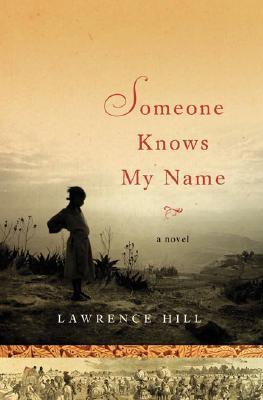
The original book was The Book of Negroes. The edition I read in 2009 was called Someone Knows My Name.

It was a heart-wrenching story and my review went on Goodreads back then. 

Someone Knows My NameFantastic historical fiction!! One of the best. I found this novel engrossing and emotional and I hated to put it down. I had to remind myself that I needed to sleep, thus had to set it aside here and there. It is a very unbiased look and recollection of the slave trade. By unbiased, I mean this novel shows the flaws and the wrongs of everybody involved. The blame does not sit on one group or country. The story follows Aminata, an incredibly likable and wonderfully sassy young girl that is captured and stolen from her family in Africa by fellow Africans and then sold to white men from America.

Readers get an appalling and emotional ride on a slave ship and learn about the foul conditions and ill treatment that was dished out to the captured people everyday. Following the ship, the story takes us to a South Carolina plantation and Aminata learns to read and finds love while at the same time, dealing with a cruel, sometimes abusive "owner".

From there, the feisty heroine makes it to New York City and the world of Black Loyalists and then Novia Scotia and finally, London. Aminata leads a hard, tough life and deals with good and bad from every race. From the Africans who sold her to the Americans that bought her to the British that betrayed her and back to the Africans who attempt to enslave her yet again. What a story! And during all this trauma, Aminata still finds love and joy in her life and makes friendships. I felt like I really knew her and sometimes I had to stop reading to collect myself. My only complaint about this novel is sometimes there was too much information about bowel movements. Otherwise, it was perfect and the ending brought tears to my eyes.


That being relayed, I'm excited to announce this wonderful book has made it to the "little" screen. You can watch or set your DVRS to record The Book of Negroes Feb 16th on BET. And it's got Cuba Gooding Jr in it, so some eye candy indeed. 

It's not clear to me, however, just how many episodes there are. I see two different episodes on the TV, but a channel named CBC seems to have 4, 5 episodes, so I'm a bit confused. You'll have to figure that out for yourselves! And if you miss it Feb 16th, it will be available on DVD on Amazon April 7th.


Saturday, February 7, 2015

The Reading Radar 2/7/2015

I spotted this one on Historical Editorial (probably my favorite blog in the world for books. My TBR is toppling because of it!) Regardless, The Hidden Hills Saga: Book I: Ice Whispers by K. Willow has hit my wishlist.

The Hidden Hills Saga: Book I: Ice WhispersSlavery of a different kind, beyond physical chains, leads to a different type of escape . . .

Marissa Kristofferson can taste freedom. Her long years of suffering at the hands of her sadistic husband, Lance, are coming to an end as he lies dying. But she is stunned when he reveals the contents of his will and what she must do to keep Kristofferson Plantation, and how he plans to keep her bound to him even beyond the grave.

The beautiful slave Lolley has always envied Marissa’s life, and after learning that the master has also ordered her freed after his death, she is determined to reach for the life she wants by becoming the mistress of Marissa’s son, Shane, though she does not realize the lengths Marissa will go to to prevent the match, or the far-reaching consequences that will follow.

And Shelby, the plain and dutiful slave of free blacks, is unwittingly caught in the shocking drama that unfolds as a family is torn apart. Used as a pawn in a game of rivalry, deception, and betrayal, hers is a fight for survival while attempting to remain true to herself.

Three women—so very different but each carrying dark secrets that are closely intertwined, caught in a world between slave and free, a world which is becoming more fragile and precarious as war threatens and alliances shift, and each harboring seemingly impossible dreams of a better future.

In this first book of a dark historical saga, K. Willow paints a lush, emotional portrait of scandal, murder, injustice, and the ties that bind in the antebellum South.

***

Silence in CenterSpotted on Deaf Characters in Adolescent Literature: Silence in Center by Jody Studdard hit the wishlist. The heroine's situation sounds so similar to things I've faced.

Melody Gold is a fourteen-year-old fastpitch player who wants to make the move from Little League to select ball. But none of the select coaches want her since she has a hearing impairment and must wear hearing aids at all times, even during games. Unwilling to take "no" for an answer, Melody becomes determined to prove her hearing impairment is irrelevant and she can compete at the highest level. An inspiring tale for readers of all ages.


***

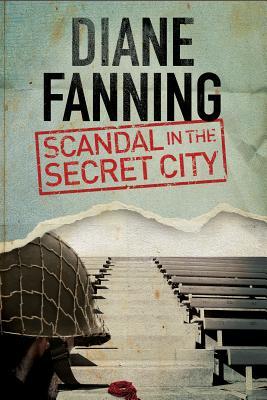
Spotted on Reading the Past, Scandal in the Secret City by Diane Fanning made my radar/list.

Scandal in the Secret City: A World War Two Mystery Set in TennesseeFrom the author of the Lucinda Pierce series, comes a thrilling new mystery, set during the Second World War . . ."
Oak Ridge, Tennessee, otherwise known as the Secret City, rose seemingly overnight in 1942, built by the US Government. No one was quite sure what its purpose was or where it came from, but there was certainly something going on . . .
Libby Clark, a gutsy Bryn Mawr graduate, is determined to find her place as a scientist in a world where women are thought better suited to housework and marriage. As the only female scientist in the top secret facility, Libby is excited to begin what she believes is important government research.
She soon begins to suspect, however, that not all is as it seems. And to make matters worse, one frosty night she discovers the dead body of her roommate s sister sprawled behind the bleachers. No one else seems to think finding the killer is important and it s up to Libby to make sense of the situation. Aided by a band of like-minded scientists, Libby follows every possible lead until she comes to a shocking and unexpected conclusion.


Friday, February 6, 2015

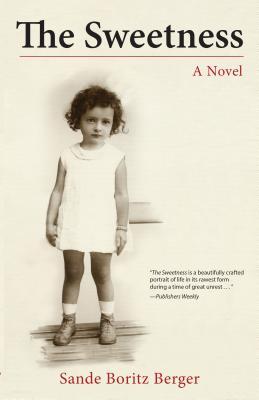
The Sweetness by Sande Boritz Berger: A Life Lesson from a Hidden Jewish Girl in WWII

The SweetnessSince I've been here, every day, without realizing, I have tried to find something that makes me happy, no matter how small a thing that might be. Today it was the little speckled bird chirping outside that reminded me that it is nearly spring.

The sweetness is about finding sweet in what's sour, about adding sugar to lemons to make lemonade. It's about finding joy where there is not much to be found. This lesson comes from a young girl (age 8 to 9), who after her parents are massacred by the Nazis, hides in the home of a Catholic woman for the war.

And while this young girl finds pleasure in little birds at the window--'cause really, there's not much else to be found--Mira and her two aunts make a life in New York City.

We have two very different situations here. While that girls hides in the basement with little joy in her life, her Jewish family in America has no clue how good they have it. Oh, they say they do, but the patriarch of the family is such a jerk. He pulls strings to keep the men out of the war, when it's his own people they'd be fighting for. He worries about money when he has more of it than he needs, while his own people starve in camps. He just controls things constantly--in his daughter's and his sisters' lives.

And I'm sad to say that was the majority of the book--him and his daughter, Mira, who I really liked until she got married and threw her dreams away. Every now and then the story strayed to the older sisters/aunts and one of them was just...well, she went through trauma after trauma and in the end after surviving much and finally getting married--which she wanted above all else--she still couldn't get right in the head and I am left wondering what the point of her story was.

I also didn't care for the narrative of the American stories. It was third person and all telling, no showing. The author did a much better job with Rosha's story, which was in first person and allowed myself, the reader, to actually live in the story for a bit...a very brief bit. As I said above, Rosha's parts are VERY FEW and in the end it hurt the story for me. By the time the story ended, while I appreciated the lesson Rosha imparted in such a brief time, I was tired of her American family, of reading about their everyday lives and problems and their attitudes. And I was BORED. I don't want or need pages TELLING me about Mira's wedding.

Instead, I'd have preferred to be with the Polish family and Rosha. I also don't see how in the world it all tied in. It felt like all these different stories going all these different places with no real plot.

A miss for me, but I thank Netgalley for the chance to read it.


Thursday, February 5, 2015

Ten Questions from Tara: Interview with David Ebsworth

Tara: Welcome. You’re here to promote The Last Campaign of Marianne Tambour, a historical fiction novel. Tell me, please, what was the inspiration behind this story? How did it come to you?

The Last Campaign of Marianne TambourReaders, here is a blurb:
On the bloody fields of Waterloo, a battle-weary canteen mistress of Bonaparte’s Imperial
Guard battalions must fight to free her daughter from all the perils that war will hurl against them – before this last campaign can kill them both.


“Superb! David Ebsworth has really brought these dramatic events to life. His description of the fighting is particularly vivid and compelling.” – Andrew W. Field, author of Waterloo: The French Perspective and its companion volume, Prelude to Waterloo: Quatre Bras
Praise for David Ebsworth’s novel, The Jacobites’ Apprentice, critically reviewed by the Historical Novel Society, who deemed it “worthy of a place on every historical fiction bookshelf” and named it as a Finalist in the Society’s 2014 Indie Award.


David: This is my fourth novel and I had already decided to write a book about the Battle of Waterloo. This year is, after all, the 200th anniversary of that turning point in European history. But from what angle? I always to tell the stories that I wish somebody else had already written but which don’t yet exist. I studied all the fiction written about Waterloo since Stendhal first published The Charterhouse of Parma in 1839. And, surprise, surprise! Nobody else has ever written about women on the battlefield itself. And there were plenty of them. The French army had adopted the use of cantinières very early – women sutlers serving with each battalion and usually in the thick of battle. And, in the more equal aftermath of the French Revolution, there were always women soldiers who served in the front lines. They became my inspiration.

Tara: We focus a lot on heroines here on Book Babe. Tell me what makes your heroines strong. This does not necessarily mean she’s running around with a sword. A woman has many different types of strength. Though running around with a sword rocks too. LOL

David: Well, in truth, one of them does run around with a sword. Her name is Liberté Dumont and her character is based on the real-life exploits of a woman called Marie-Thérèse Figueur who fought in her own right, as a French Dragoon, all the way through those wars from 1793 until 1814. Then there’s Marianne Tambour herself. Based on another real woman, Madeleine Kintelberger, a cantinière of astonishing bravery who went into the thick of the Battle of Austerlitz with her three small children when she was, herself, eight months pregnant. These women survive on a negligible diet, rise at 4.00am, then march 9-10 hours each and every day, look after the soldiers in their battalion, care for their own kids, then find themselves plying their trade (selling brandy, mostly) in the front lines of the battles themselves. And yes, of course, on top of all these things, they carry all the normal attributes of female strength too – always taking charge of their own destiny even in the midst of tears, pain, despair and heartbreak.

Tara: Did any particular woman in your family or life help inspire some of their traits?

David: Yes, of course. My mother survived the Second World War and raised her family despite being blitzed three times. She lost three homes and every single possession and stitch of clothing in three different British cities (Plymouth, Liverpool and Glasgow) over not much more than a single year. My wife, Ann, was a tough union organiser in a local factory and fought her way through a serious cancer. And I worked regularly with feisty women who had struggled against repression and adversity in many forms, both in the UK, and also in Spain, Nicaragua and Colombia.

Tara: Wow! Are you going to write or have you penned a novel about your mother? She sounds amazing.

Was there any particular part of this story that was the hardest for you to write? Tell me why.

David: There’s the scene in which Marianne has to deliver a baby while the army’s on the march – well, in truth, on the edge of a battlefield. This was based on several real-life incidents that I’d read. But I found that describing the birth from such a close perspective, and in the detail it deserved, was a bit harrowing. Marianne took it all in her stride, of course – well, more or less! After all, she had to keep one eye on the progress of the battle at the same time, watch out for her daughter too, while also guarding against attacks by some pretty nasty rivals.

Tara: What kind of research did you do when you penned this novel? Did anything surprising come up in your search? Perhaps something you had no need to put in the book but stayed in your mind nevertheless?

David: For historical fiction, the “big” things – the settings and historical backgrounds – are relatively easy to research. It’s the smaller details that lend them authenticity and, generally, are more difficult to track down. In this case, for example, I had to think a great deal about armies on the march. So their boots, of course, became a feature. What did they do when (it happened frequently) they would lose just one of them in a quagmire? How did they get a replacement? It took a lot of searching before I found that, until well into the 19th century, boots weren’t made with left or right feet, and came only in three sizes – small, medium or large.

And then there were the teeth. It was the teeth that have stayed in my mind. They say that, on the day after the battle, you couldn’t find a pair of pliers for love nor money. Not for fifty miles around. The new fashion - in London, Paris, Berlin and St. Petersburg – was for dentures fitted with real teeth. And there, on those few square miles of Belgian soil, lay no less than 50,000 potential donors, most of them dead, the rest so close to it that it didn’t much matter. There was real money to be made for local citizens, hundreds of them – if only they could find a pair of pliers!

Tara: Now that's an interesting tidbit about the boots. I had no idea. I imagine their feet hurt not having properly fitting shoes.

What would you like readers to gain from reading your book? Is there a strong moral? Do you hope they will laugh, learn something about a particular subject/person, ponder a point?

David: Entertainment, above all, is the thing I hope readers will gain. This is a work of historical fiction, and I’m sure that when folk pick up a copy in the bookstore, or browse it online, they’re mostly just hoping for a “good read” – and I therefore have a duty to provide one. But within that I also think it’s important for any of my stories to have measures of laughter, happiness and all the other sentiments that fill our lives. If they didn’t, the stories wouldn’t be very realistic. Similarly, the characters have to possess whatever moral viewpoints might also be important for the tale. That’s very different, I think, from authors imposing their own moral viewpoints on a novel. So what are the morals that spring from Marianne? Human fortitude in the face of terrible and repeated loss, perhaps. The futility of war naturally but, more importantly, the realisation that wars might ostensibly be justified on moral grounds but, in practice, for the past two hundred years and more, have actually been driven in general by international bankers and the arms industries.

Tara: Your book takes place in Belgium. If I were a tourist, what would you recommend I see in this country?

David: When I’d finished writing the first draft for Marianne, I needed to visit the battlefields to check them out. So we followed the route that Napoleon’s army would have travelled during the campaign – and then wrote a short travel guide that would help readers and travellers to follow that same route. It appears at the back of the novel. So, starting in Paris, the most fabulous of all European capitals, and then heading up towards the Belgian borderlands. Beautiful countryside along the River Sambre. Then the rich countryside north to Brussels – also a wonderful city to visit. But the highlight, naturally, is the Waterloo battlefield itself. It is remarkably little changed since 1815 and a series of tracks allows visitors to walk all the key areas along and between the ridges on which the opposing armies formed for the conflict. The visitor centre there is currently being renovated in time for the bicentenary celebrations but it contains a very beautiful and impressive panorama – similar in size and style to the equally famous cyclorama at Gettysburg. Well worth a visit!

Tara: Moving on to personal things...if you could time travel to absolute any time and place in history, where and when would you go and what is it that draws you to this time period? What would you do whilst there?

David: No question about this one. It would be 6th Century Britain (the subject of my fifth novel). It’s the start of what we call the Dark Ages – normally because it’s traditionally been thought that Europe was, during this time, plunged into barbarity. We now know that this is incorrect, so the Dark Ages now signify, far more, our own ignorance of this period of history. And in that general ignorance, nothing is more shrouded than the history of Britain from 500-600 AD. There is only one contemporary chronicler, a monk called Gildas, and clearly selective in what he wrote. After that, it’s a couple of hundred years until anybody else puts quill to vellum and, by then, “Chinese whispers” have set in and the “records” completely confused. So I’d take my iPad and chronicle the whole period properly. And resolve once and for all, of course, whether there was (and this is highly unlikely!) ever a “real” King Arthur.

Tara: Oh no! I'd rather just go on believing he really existed, as did Lancelot. LOL

What’s the one thing you hope to accomplish before you die? Your main goal?


David: Oh dear, that’s a tricky one! To be honest, I’m fairly content with my life and accomplishments to-date. My main goal is simply to see my family continue in good health and for Ann and myself to see our kids, grandkids and, now, our first great-grandchild, grow and prosper in a world where the politics of hate will, hopefully, be less prevalent.

Tara: I’m a dog mom, so I always ask this. Do you have pets? If so, tell me about them and do provide pictures.

David: No, no pets, I’m afraid. We live a fairly nomadic life, one way or the other – so caring properly for pets would be difficult, to say the least. And, to be honest, I’m more comfortable with animals in the wild than in the home. Some of my happiest moments have been while sharing sea-room with porpoise and dolphin, pilot whales and gannets. Or out on the mountains with red deer, buzzards and the occasional golden eagle. Or on the South African veld with giraffe, cheetah and Cape buffalo. I think it’s important to keep wildlife in the pages of my books. It’s just as important as keeping sounds, smells and colour in descriptive writing. And authenticity too. After I’d been to KwaZulu-Natal to check out the locations for The Kraals of Ulundi (my third book), I realised there was something missing. Then remembered that, wherever we’d visited during the trip, there’d always been the raucous cry of the Hadeda Ibis. It gets its name from the noise it makes and anybody reading my book in South Africa itself would have said that the settings weren’t authentic if there’d been no Hadeda in some of the scenes. So these have all become some of my “pets”, I guess. But my real pets? My books, naturally!

Tara: Thanks so for joining us today, David, and good luck!

***

David Ebsworth is the pen name of writer, Dave McCall, a former negotiator and Regional Secretary for Britain's Transport & General Workers’ Union. He was born in Liverpool (UK) but has lived for the past thirty years in Wrexham, North Wales, with his wife, Ann. Since their retirement in 2008, the couple have spent about six months of each year in southern Spain. Dave began to write seriously in the following year, 2009.


***

Wednesday, February 4, 2015

A Question of Death: An Illustrated Phryne Fisher Anthology

A Question of Death: An Illustrated Phryne Fisher Anthology
Spill your drink down his shirt. In extreme cases, a fork in the groping hand or a cup of hot coffee in the crotch is a guaranteed distraction.
--One of six ways to discourage the overenthusiastic suitor

The first story (A woman in a hotel searching for her husband) is awful. It's vague; the conclusion is so rapid you don't have time to even guess what it is. There are editing errors. (Only in this edition. The situation is being remedied, I'm assured, by Poisoned Pen Press.)

The second story finally brings into the book the characters we've come to love so much by watching the TV show: Inspector, Dot, Butler... The cases are quickly resolved, but each one tells us some new tidbit about Phyrne.

The second one didn't appeal to me all that much--two men dead, both due to inherit the same estate. The third was more interesting and on top of a case of missing jewelry, we see Phyrne struggle with a marriage proposal. I loved her quick thinking on the case too. And even better, there's a moral in this one. Revenge may feel great...for a moment, but it's not a long-lasting solution. My favorite story has to involve the mentally challenged gardener. I love how Phryne comes to his rescue.

Some of the cases reminded me of some of the episodes in the TV series: a missing football "charm", a woman of possible ill-repute dead in a lawmaker's home, a ski chateau setting, Juana the Loca and college.

Interspersed here and there are cocktail recipes and such and some lovely illustrations. I especially like how each story is on different printed paper. Blue circles, green lines, pink circles... It's very subtle and only visible in certain light. It was a surprise to me when I realized it. The pictures of Phyrne herself seem to get better as the book continues. And of course, Phyrne's delightful conversations are as witty and humorous as always.

I do think, however, that the mysteries could have been a little more fine tuned. I prefer a little time to figure it out on my own, a few hints so I can get to that point. I didn't get that with stories this short. It was just "here's the situation...and oh, here's the solution!" We're told a man pours the soup but we're not told that his hand is discolored until Phyrne announces the case is solved and how she figured it out. We're never given clues to come to any conclusions ourselves.

I bought this on Amazon.


Tuesday, February 3, 2015

Rough Rider by Victoria Vane

Rough Rider is the second book in the Hot Cowboy Nights Series. I really liked book 1, Slow Hand, but I loved Rough Rider. This book was full of chemistry and didn't follow the norm of a romance. Janice doesn't take the path we as the reader want her to, and we have to sit back and wait.

We meet Dirk in Slow Hand, but Dirk's story starts years before we met him in Slow Hand. In Slow Hand, he's kinda a dick. He's angry, and when you sit to read Rough Rider, you learn about his life and the things he went through. He hasn't had an easy life as he's tried to discover who he is in the world.

He meets Janice in his early twenties after a bad relationship. She's always admired him from afar, but he never notices her until one night when he takes her virginity. However, there is another man who has his eyes set on Janice, and he's determined to win. Here is where the story changed from the normal romance. She never would've looked twice at the other guy, however Dirk wasn't ready to settle down, so the other man is able to swoop in and delay her and Dirk's love story. But even years later, Dirk still isn't ready to settle down and Janice has to decide if this angry man is really worth it.

There was a little twist at the end of the story, one that I enjoyed and had really wished the story had gone on and showed how the "three" dealt with this twist. Perhaps in another book we'll get a glimpse at that part of life.

Like I said last time, Victoria Vane is a wonderful writer. She wrote a story that sizzled and there weren't many intimate scenes, but I still felt the connection between the characters.

I can't wait to read the next one.

Lacey's Rating

About the Book:


Two wary hearts ...
Janice Combes has two loves, bucking bulls and Dirk Knowlton. But Dirk only has eyes for a dazzling rodeo queen. How can Janice ever compete while mired ankle-deep in manure? Exchanging playful banter with Dirk is all Janice can expect-until the stormy night he knocks on her door dripping wet and needing a place to crash.

Different Dreams...
Dirk Knowlton is living the cowboy dream. Life should be good-roping, branding, backing broncs, riding bulls, but there's a void he can't seem to fill. After getting hung up by a bull, he wonders if this is really the life he wants. Restless and rebellious, he bolts...but there's a certain cowgirl he can't forget.

When a battle-scarred Dirk returns to his Montana ranch he's determined to hang on at any cost. Janice has come back home to lick her own wounds. When old dreams turn to dust, can two wary hearts take another chance on love?

Monday, February 2, 2015

The Garden of Letters: The Cellist Who Was Code Named Dragonfly


The Garden of Letters by Alyson Richman takes place in Italy during WWII.  I have not visited Italy in WWII through the pages of a book since reading The Garden of the Finzi-Continis during my teen years. Regrettably, I have not read Alyson Richman since The Mask Carver’s Son which I very much admired for the way it showed the differences between the perspective of art as a tradition, and the perspective of art as an individual accomplishment.  In The Garden of Letters Richman deals with the perspective of a musician discovering her true priorities in a time of fear and privation.  


When I read about fictional protagonist Elodie Bertolotti’s dedication to music and her love for the fine cello that her father had given her, I was reminded of The Rainaldi Quartet by Paul Adam, a mystery I read some time ago  dealing with luthiers and the love of great violins with a history behind them.  It also took place in Italy, but it didn’t stray outside the world of music as The Garden of Letters does.  Because when your friends are courting danger and your country is about to be invaded by alleged allies, being absorbed in music is not enough for a person of integrity.  I was impressed by Elodie’s courage when she joins the Resistance, and her ingenuity in inventing a new means of secret communication.  I’ve read a number of novels dealing with the French Resistance.  I had expected the Italian Resistance to be similar, but Elodie brought her background into the Resistance which gave fighting the Nazis an unusual twist. 

I would like to discuss a few thoughts I had about The Garden of Letters of the title.  It was seen as a private expression of love, but no one ever called it art or its creator an artist.  Do people only think it’s art if it’s public and the elite give it sanction?   Does the fact that a woman created it for her husband make it not art?   If so, then the definition of art needs to be broadened.  My paternal grandmother had examples of her crewel embroidery hanging on a wall of her living room.  Few people got to see them, but I’d definitely consider them art.  My grandmother was an artist with her needle.   I think that Dalia, the creator of The Garden of Letters, was an artist though she probably would never have thought of herself that way.  All expressions of the creative impulse could be considered art. The Garden of Letters also gave Dalia the strength to deal with separation from her husband.  Therapeutic art is still art. 

The Garden of Letters shifts perspectives and time periods.  I never got confused even though the story didn’t unfold in linear order.    I didn’t think that the head hopping was unclear or excessive.    Other readers might have problems with the author’s narrative techniques, but I consider this the best historical fiction that I’ve read so far in 2015.