Showing posts with label England. Show all posts

Thursday, October 3, 2019

The Light Over London: A WWII Novel of Romance, Secrets and Women's Autonomy

When a publicist pitches a book to me, the content of that pitch matters very much.   I want it to pique my interest, but I also want it to accurately reflect the book.  I should be made aware of what kind of book I'll be reading.  I try to do that in my blog review titles, so that the book will find its audience.

It seems to me that advance publicity for The Light Over London by Julia Kelly is trying to appeal to the sort of reader who is interested in the combat aspect of WWII.  There is an emphasis on the female historical protagonist joining an anti-aircraft unit and becoming a Gunner Girl.  The sort of reader who is interested in reading about Gunner Girls will expect that a high percentage of the book will contain action scenes or will at least take place in a military context. I requested this book for review on the strength of that publicity and received a copy from the publisher via Net Galley.


As I read Light Over London, I realized that I had to adjust my expectations.  It was a good book, just not the one that I thought it would be.   There was a combat sequence. There were also descriptions of training.  Julia Kelly captured the bonding between the women in the anti-aircraft unit very well. Yet I'd estimate that the Gunner Girl experience represented about 10% of the book.

I think that the other 90% was what the novel really focused on.   It was about the struggle of women to define themselves as individuals and live out their dreams.   It was also about how family, or the men in their lives supported or hindered them.   There were a number of  female characters in The Light Over London who were strong women.  They all went on to live the lives they chose for themselves.   There were no  relationships that involved a conventional romance genre HEA, but I think all these truly autonomous women found their own form of happiness.

There were a couple of major secrets.  One was a devastating scandal that infested the heart of a romantic relationship.   The other was a character building mistake that a family member made when she was young.   Both women moved on, and didn't allow themselves to be crushed by circumstances. I have to say that I was able to predict the nature of these secrets before they were revealed based on what I knew about the people involved.  So there were no surprises for me, but it was satisfying that I understood the characters so well.

I was glad to learn about the existence of Gunner Girls, and was delighted to find a novel like The Light Over London where all the major female characters were an inspiration. 


Saturday, November 11, 2017

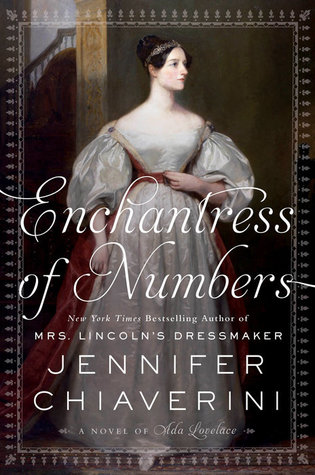
The Enchantress of Numbers by Jennifer Chiaverini

I knew Jennifer Chiaverini as the quilt novel author.  She introduced me to the idea that quilts were signposts for the Underground Railroad in The Runaway Quilt which I loved.  I knew that she'd been writing biographical novels of female historical figures, but I didn't sit up and take notice until it was Ada Lovelace in Enchantress of Numbers.  I've always wanted to know more about her role in the development of the early precursors to computers.   So I requested an ARC from Net Galley and was delighted when I was approved by the publisher.   This is my review.

                                   34555334

Most discussions of Ada Lovelace begin by mentioning that she was Byron's daughter and that her parents scandalously separated.    What's really astonishing in the context of the period is that her mother got custody of Ada.   Children were considered property belonging to their fathers in 19th century England.  In this case, it came down to the fact that Ada's mother, Lady Anne Isabella Milbanke known as Annabella to her friends, came from a wealthy family and Byron was debt-ridden.   Debt was a major motivation for his marriage.  So it seemed to me that Annabella's family was in a good position to buy justice for their daughter.  It's probably just as well because the only time Byron did have custody of a daughter, he relinquished his parenting responsibility by packing her off to a convent.

Based on Chiaverini's depiction, Annabella wouldn't receive any awards for parenting herself.  Yet she should be credited with making certain that Ada followed in her footsteps by pursuing mathematics.   This was an extraordinary education for a daughter of the aristocracy.  According to the article about her on Wikipedia, Annabella's parents hired a Cambridge professor as her tutor.
 If Ada hadn't had Annabella as her mother, it's unlikely that she would have been so advanced mathematically.

 In The Enchantress of Numbers, Ada's scientific mentor Mary Somerville told Ada about her conflict with her own parents over her studies.   It was widely believed at that time that women's health would be jeopardized by intellectual stimulation.  Mary Somerville's experiences caused Ada to appreciate her mother's encouragement of her scientific inclinations.  I had never heard of Mary Somerville before I read this book, and was glad of the opportunity to learn about this foremother for woman scientists.

We can't really know about Ada's contribution to Charles Babbage's conceptualization of his proto-computers the Difference Engine and the Analytic Engine.  This is a topic that is fodder for  speculation for historical novelists like Chiaverini.  I made the same argument about Einstein and his first wife in my review of The Other Einstein here.  I feel that it's just as legitimate to claim that Ada made a significant contribution as to claim that she made none, and that it was all Babbage's idea.  I believe that Chiaverini is persuasive about what she attributes to Ada Lovelace.

Ada's written notes are clearly attributable to her, and they show her to be a woman ahead of her time.   The Enchantress of Numbers displays her context.  She had influences, and sources of support which do not lessen her achievements.   Isaac Newton is quoted as having said, "If I have seen further it is by standing on ye sholders of giants."  Jennifer Chiaverini helps us to identify who Ada might have stood on.   Yet every designer of a computer algorithm stands on Ada's shoulders because she created the very first such algorithm.


Tuesday, April 14, 2015

The Masque of a Murderer: A Mystery in the Aftermath of Disaster in 17th Century London

 photo 0c98af23-6f8a-468d-8753-ee04866e4cd9.png

Publication Date: April 14, 2015
Minotaur Books/St. Martins Press
Formats: Hardcover, eBook
Pages: 323
Series: Book Three, Lucy Campion Mysteries
Genre: Historical Mystery

Add to GR Button

02_The Masque of a Murderer_CoverIn Susanna Calkins’ next richly drawn mystery set in 17th century England, Lucy Campion, formerly a ladies’ maid in the local magistrate’s household, has now found gainful employment as a printer’s apprentice. On a freezing winter afternoon in 1667, she accompanies the magistrate’s daughter, Sarah, to the home of a severely injured Quaker man to record his dying words, a common practice of the time. The man, having been trampled by a horse and cart the night before, only has a few hours left to live. Lucy scribbles down the Quaker man’s last utterances, but she’s unprepared for what he reveals to her—that someone deliberately pushed him into the path of the horse, because of a secret he had recently uncovered.

Fearful that Sarah might be traveling in the company of a murderer, Lucy feels compelled to seek the truth, with the help of the magistrate's son, Adam, and the local constable. But delving into the dead man’s background might prove more dangerous than any of them had imagined.

In The Masque of a Murderer, Susanna Calkins has once again combined finely wrought characters, a richly detailed historical atmosphere, and a tightly-plotted mystery into a compelling read.

Lucy Campion Mystery Series Titles

Book One: A Murder at Rosamund's Gate
Macavity Award Finalist Sue Feder Historical Mystery Award (2014)
Barnes & Noble Bookseller's Selection ("Mystery Pick" and "Featured New Arrival")
Chicago Book Review - Best Books of 2013


Book Two: From the Charred Remains (Paperback release on March 17, 2015)
Short-listed for the Bruce Alexander Historical Mystery Award (2015)


Book Three: The Masque of a Murderer (coming April 2015!)

***REVIEW***

I  hadn't read the previous two Lucy Campion novels when I agreed to participate in this blog tour.  After I downloaded it from Net Galley, I decided to read A Murder at Rosamund's Gate for background.  It turned out not to be necessary.  Susanna Calkins provides all the background about Lucy in  The Masque of a Murderer.  Yet readers who are curious about what Lucy's life was like as a chambermaid should pick up that first book.

 I'm more interested in Lucy's unusual apprenticeship to a printer myself.   The only reason why such a thing was possible is because this novel took place in the aftermath of the Great Fire of London.  This disaster wreaked death and chaos on the city of London which brought about social change.  I noticed that it didn't change social attitudes.  Lucy couldn't be admitted to the printer's guild as an official apprentice.  Her master didn't treat her the same way as his male apprentice and didn't have the same expectations of her.  Lucy probably felt that she was lucky to get the opportunity to learn the printer's trade.  She probably also knew that if she demanded official status, she would lose her position.  Attitudes usually change slowly.   Without someone like Lucy working in a printer's shop to show that it's possible for women to enter this profession,  there could have been no progress.

Lucy also showed courage and persistence in her pursuit of the killer.  When the men who become involved in this investigation try to sideline her, she refuses to allow them to stop her.  Her role was crucial because she had access to the Quaker household in which the victim resided, and Quakers were willing to talk to her.

The Quakers of 17th century England were very different from modern Quakers.  They were troublemakers.  They aggressively sought conversions, and probably thought that persecution would bring more people into the fold.  This had been the strategy of the early Christian martyrs of ancient Rome. I expect that toleration wouldn't have suited their aims.  They valued their non-Quaker allies, but seemed to expect that they would become Quakers.  I didn't find these Quakers very sympathetic.  Their missionary zeal irritated me.  Lucy had far more patience with them than I would have had in her place.

The mystery became predictable at a certain point.  The perpetrator  had the same sort of background that we find in contemporary crime novels.  Since I have read so many of them, I found it too easy to spot the pattern.   Then the plot became more about taking the killer into custody than discovering whodunit.

I liked Lucy and several of the other characters, and found the book entertaining, but I don't think it was particularly memorable.  I would definitely be willing to read future books dealing with this protagonist.  As a printer's apprentice  who is exposed to all the latest political and religious tracts, Lucy has a finger on the pulse of her times.   She is certain to get swept up in all sorts of controversies.  This series has loads of potential.


Pre-Order the Book


About the Author

03_Susanna Calkins_AuthorBorn and raised in Philadelphia, Susanna Calkins lives in Highland Park, Illinois with her husband and two sons, where she is an educator at Northwestern University. With a PhD in history, her historical mysteries feature Lucy Campion, a 17th century chambermaid-turned-printer’s apprentice. Her first novel, A Murder at Rosamund's Gate, was a finalist for the Sue Feder Historical Mystery Award (Macavity). The second in this series, From the Charred Remains, is currently a finalist for the Bruce Alexander Historical Mystery Award. Her third, The Masque of a Murderer, will be released in April 2015.

For more information and to subscribe to Susanna Calkins' newsletter please visit her website. You can also follow her blog, and connect with her on Facebook, Twitter, and Goodreads.


The Masque of a Murderer Blog Tour Schedule

Monday, March 16
Tuesday, March 17
Guest Post at Bibliophilia, Please
Wednesday, March 18
Interview at Flashlight Commentary
Friday, March 20
Monday, March 23
Review & Interview at Oh, for the Hook of a Book!
Wednesday, March 25
Review & Interview at The Emerald City Book Review
Tuesday, March 31
Wednesday, April 1
Character Interview at Boom Baby Reviews
Thursday, April 2
Monday, April 6
Tuesday, April 7
Spotlight at The Genre Queen
Thursday, April 9
Review at The Lit Bitch
Guest Post at A Literary Vacation
Friday, April 10
Review at Book Nerd
Monday, April 13
Tuesday, April 14
Review at Book Babe
Thursday, April 16
Spotlight at Layered Pages
Friday, April 17
Spotlight & Giveaway at Passages to the Past


Wednesday, December 3, 2014

A Memory of Violets: An Absolutely Lovely Historical Read

A Memory of Violets: A Novel of London's Flower SellersThey've shown me that there is always an opportunity to display fortitude in the face of adversity, that it is not up to society to provide us with a sense of belonging and acceptance but rather up to each of us to allow ourselves to belong, to allow ourselves to be accepted.

I thought this an absolutely lovely read. At first I worried it would be a difficult read due to the grammar of Florrie, but she doesn't narrate the entire story and once I became adjusted to the whats in place of thats, I realized the narrative suited her and her situation and that it also served to make her and Tilly's parts immediately distinguishable. So I advise readers who are often deterred by poor grammar to keep reading.

There's so much going on here, so many stories that will either make you sad, angry, or happy. There's a myriad of emotions within these pages. It's heartbreaking to read about the flower sellers and the extreme poverty of 1800s London. It's uplifting to learn about John Groom (Albert Shaw in the story) and how he saved so many orphans, crippled, and blind flower sellers and gave them homes and a purpose: the making of fake flowers. The whole Queen Alexandra day really happened and it's an inspiring thing to read about. It's infuriating to read about a woman who though her intentions were good, her reasons were selfish, when she deprives another of the only person they have in the whole world.

But what I enjoyed the most about this story is how Tilly goes to work with the crippled and blind and at first distinguishes each one by their handicap. As the story continues, she sees the error in that way of thinking and no longer sees their handicaps, but who they are individually. Many people today should take such advice to heart. I also appreciated the difference between Esther--a handicapped child with no purpose in life, coddled, pitied--and the flower girls--handicapped but self-reliant as much as possible and happy to have a purpose each day. It's so important and her story line served to show us this.

I have failed to mention the story itself...a quick bit: There are two story lines, the late 1870s and 1912. In 1912, Tilly leaves her home in Northern England to work in Albert Shaw's home for orphaned flower girls, where she overseas and cares for handicapped young women who work in a flower-making factory. She finds a journal from a previous resident, Florrie, who lost her beloved sister in 1876. While Tilly tries to track down the missing sister, she also comes to find out some truths in her own family life and learns to forgive herself for a past misdemeanor.

Loved the writing, the characters (except Mrs. Ingram. Grrr.), the story itself, and the morals within. My quibble has to be that there were far too many coincidences. Though they mostly tied up very nicely with a beautiful ending, I thought there were a bit too many. Perhaps the final revelation from Tilly's life could have been left out as it was a coincidence that added nothing to the tale really. (I'm trying to avoid spoilers)

I received an ARC via LibraryThing.


Thursday, November 20, 2014

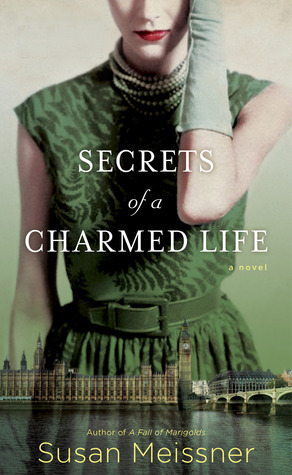
Secrets of a Charmed Life: Powerfully Moving, Riveting, Thought-Evoking Historical Drama

Secrets of a Charmed LifeWhat good is remembering an event if you don't remember how it made you feel. How it impacted others. How it made them feel. You would learn nothing and neither would anyone else.

I love being shocked, being forced to think, and becoming completely engrossed in someone else's story. This book certainly didn't disappoint. I was sucked in by the engaging narrative. I was left in suspense as to the ending. I was forced to think hard on the issue it tackles: blame. Notably blaming oneself for things out of one's control.

And this was a good lesson for me right now.

The lowdown: It's London, WWII; the actual focus is what happens during the Blitz. Though the story delves into the before and after, it's about how the Blitz completely changed the course of people's lives: two sisters, their mother, an "aunt", and more. Hardly a single soul went unaffected. It's about family being torn apart and while you could point the finger at so-and-so for having done this and so-and-so for not having done that, in the end, the blame lies with war itself.

It's about blame, beating one self up, and there's a side story about being forced to grow up before one's time. Being forced to be a mother when one isn't. Taking on more responsibility than one is ready for. So many lessons wrapped up in these pages.

And there's a mystery too, one you can never possibly figure out till the very end. Yet we can make assumptions. It's like a guessing game. In the end I was blown away by how many people were involved and didn't even realize it.

Imagine living that way for real. What happened to her? Did she die? Did someone find her? Was it my fault? Imagine thinking that for twenty years, and you'll be in Emmy's shoes. I love the way this story came together; the brides dresses, the umbrellas, the names. I felt for both heroines. I was on the edge of my seat wondering what would happen next. And because so much of this tale could be considered spoilers, I hesitate to write paragraphs explaining what happens. This is one you need to read for yourself. You won't regret it.  In the end, I was amazed at how so many people were involved, at who made errors in judgement and didn't realize what they were doing.

The writing is stellar and engrossing. Not too much of anything; not too little. The modern story is very minimal and you only need it to tie things together, but this didn't bother me at all. It worked well. There wasn't enough of it to distract me from the history and lesson and the story of mothers and daughters and sisters within the pages. And the final lesson (at least to me): the closest you get to a "charmed" life is allowing yourself to be happy.

I received this via Goodreads Firstreads.


Tuesday, October 7, 2014

Mrs. Xavier Stayton: A Younger Miss Marple?

Murder Most Convenient A Mrs. Xavier Stayton Mystery"More men would be better off dying young, before their wives get to know them well enough not to miss them."

It's not often I pick up a Kindle freebie by an author I've never heard of before and find a gem of a story. They are usually so/so. This one is quite good! Think Miss Marple, forty years younger, with twice the humor.

Young Mrs. X, widowed now three years, fancies herself a mystery writer all of a sudden and her and her companion set off for a house in the country...where between a very wacky family and servants, they run into a REAL murder.

The style takes some getting used to at first. The narrative is in first person--not a problem--but it's as if you're reading the manuscript of her story. It even has little notes to her editor or agent in parenthesis. This irritated me at first, but I came to understand it and once I got over the initial feeling of being "jarred" by it, I was no longer bothered.

I enjoyed the heroine and laughed so many times...I lost count. From the dog named Bugger to the sarcastic remarks exchanged between these family members who loathe each other so much... There's not only a murder mystery here, but secrets from the war, the mystery circumstances of her own husband's death, the way she calmly handles the personal questions...there's actually a lot going on in this "little" story.

Highly enjoyable. I'm not going to get into too much details about the mystery itself because that would just spoil it for everyone. As far as setting and writing and humor, the story is excellent. The only thing I disliked was the lack of clues. I like to have some idea of whodunnit and why, but this is one of those mysteries that throws everything at you at the end. Or else I'm just not that bright. LOL

I look forward to book two.


Sunday, October 5, 2014

The Iron Lady

"A man should be encouraged to stand on his own two feet. For those that can do, they must just get up and do. And if something's wrong, they shouldn't just whine about it. They should get in there and do something about it, change things." 

"I will never be one of those women...who stays silent and pretty on the arm of her husband. Or remote and alone in the kitchen."

I knew very little about Margaret Thatcher before watching this. I knew she was Britain's first Prime Minister. That's it. Thus, I found this movie not only entertaining and educational, but a learning experience.

It's done in a very unique manner. The modern-day Margaret is very old and one could say, "losing her mind". But honestly? I sort of see it as spending her remaining days on earth where she wants to be: in the past with those she loves, her dead husband, her son who is in South Africa... and of course she reminisces and through these memories we watch the younger Margaret rise from shopkeeper's daughter to a member of Parliament to Secretary of something (I forgot) and finally, to her own shock, PM.

(I can see why fans of MT are offended by the version of her going "batty", but as I said above, it didn't bother me because I saw her mind going where she wanted to be. I also think some of this was guilt. While she seemed convinced she'd done what was right for her country, she didn't seem convinced she'd been a good wife. I would have, however, have preferred they cut back on the modern scenes a bit to make more room for her rise to PM.)

And despite her husband's complaints, I don't think a thirst for power drove her. I think she honestly wanted what was best for England. She became PM in a turbulent time, when there were strikes, no electricity, garbage all over the street...

And she also battles with motherhood. We see a touching scene in which she's driving away from her children...in more ways than one. The sixties and seventies were a time when women hadn't quite figured out how to master it all. I wonder at times, have we still?

I enjoyed watching this version of MT, her speeches, the way she stands up to the men who question her. I cried with her daughter as she realized MT wasn't all "there" at times. I can't imagine watching one's mother lose her memory. I laughed the moment she said her twin pearls were non-negotiable. I cheered when she spoke to the U.S. Secretary of State about Pearl Harbor...

But where was the queen in all this? Did she never assist the PM in any decisions? Funny that we never even see a meeting btw the two.

Meryl Streep...she did superb. Incredible acting. I was completely convinced.

I watched this on Netflix.


Friday, September 19, 2014

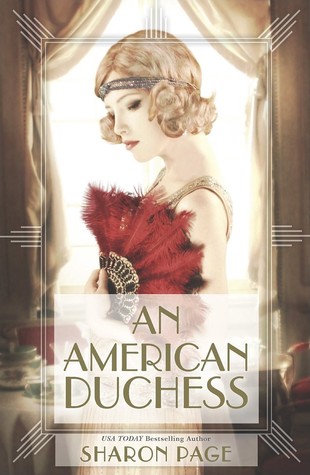
An American Duchess Transforms from Fun, Feisty Aviatrix to Emotional Basket Case

An American Duchess"I never believed in the idea of nobility. Now I understand what being noble truly means. It has nothing to do with a title. It's not even about sacrifice or duty. It's about a passion for your world, one that runs through your blood. It's about loving something so deeply you would never put yourself first."

In the past, I've often complained about romance novels, about how they always end with a couple getting married and the woman with a babe in her womb. So predictable. And is that really a HEA? We all know there's so much more to a woman's life, to marriage.

This story goes that further step, and for that I'll give it a few points, but now I understand why most stories end with marriage. It gets so boring after that. Though it didn't have to be...

I loved the first part of this book, loved the heroine, the scandal surrounding her arrival and the family she is marrying into. I laughed at her shocking remarks to all the uptight women, applauded her stance on women's rights, wanted more of her flying escapades. This was truly a heroine after my own heart....oh--and I grinned when she criticized the English upper class for having inherited their fortune rather than working for it. However, that last bit being said, I was surprised at how she changes after she's wed. It's not like she works for anything either, never did, come to think of it.

After she's married all she does is think about sex, how to get her husband to visit her bed more often, why her husband isn't sleeping with her. That becomes the main focus of her life, of her very existence. And then something bad happens and the story just won't let up on it and the emotional ramifications. I realize it's hard to go through in real life, but to pound on and on and on about it. The experience became too much of the story. The heroine became a ninny.

And then suddenly she declares, "I intend to be the first female to circumnavigate the globe. I can do this. you need three things: guts, ability and money. I do that those things, Nigel (her husband). And I want to the world that I do."

And, oh....my poor heart. I got excited for nothing. NOTHING. Oh , there's a brief mention--one sentence--of her flying from FL to NY, but that's all. Instead the story chooses to focus on her just doing something randomly stupid. And then suddenly she's afraid to fly over water, this girl was going to fly over the Atlantic? Huh? So while I loved her in the beginning, in the end I decided she was all bark, no bite.

The first part of the story has so much more going on: a younger sister in love with no dowry, a dowager stuck in the old ways, the question of a brother's sexuality, an uncle who has reason to throw the heroine's mother in jail...so much suspense and excitement that all disappears once the heroine marries and her focuses in life completely change.

At the risk of repeating myself, it was a great story in the beginning, but the exciting stuff was over too quickly and the not-so-exciting stuff expounded upon mercilessly: her loss, the duke's old-fashioned values, his shell shock. I am fully aware shell shock is an important issue, but this isn't The Poppy Factory and it was just too heavy and too much for this type of tale/genre.

I also got tired of the back and forth...I love him. I love him not. He loves me. He loves me not. I love him...

I received an ARC of this via Netgalley.


Sunday, September 14, 2014

Belle: A Magical Feel-Good Movie About Humanity and Love

"Laws that allow us to diminish the humanity of anybody are not laws. They are frameworks for crime."

I love a good period drama, but I especially love a good period drama that actually teaches me about something that occurred in history that until now, I never knew about. This is the case with Belle. It's not just a story of a mulatto woman being raised among the lords and ladies, but also the story of the Zong, a slave ship on which traumatic circumstances caused it to be a crucial step in abolishing the slave trade.

On the Zong, the traders claim to have ran out of water, a huge problem for ships in the 1700s. They had a LONG way to go. They threw the slaves overboard, chained to one another, to drown, and wrote it off as "lost cargo" and a "must in order to save the lives of seamen" aka white men.

Once back on English soil, they tried to claim insurance money for the dead slaves.

And this "lack of water" excuse passed muster in the low courts, but when it made it to the high courts, it was another story. Some facts came to light...and in order not to spoil the movie for those of you who haven't seen it, that's all I'm going to say on that. However, Belle's caregiver/uncle is the judge overseeing this case.

Behind his back, Belle is trying to do whatever she can to ensure the outcome does not go in the traders' favor. Meanwhile, a wealthy man is trying to win her hand and she believes it's her only chance to marry, because despite her wealth, most English gentlemen won't marry a woman of color. But can she act as though her Negro mother is a shameful secret? Can she shun her heritage?

It's very interesting to see what happens. I was holding my breath and at one point--the end--actually shed tears of happiness. I became quite engrossed in this tale. It's true, by the way. It's based on a real woman. Also cool to watch was how the family changed from being, "But she's a Negro! You failed to mention that. We can't raise her in this house" to "She's one of us" despite the fact they wouldn't let her eat at their dinner table.

That brings me to some things that confused me and thus knock off a bike. If they love her so much, if they accept her as they seem to, why is she eating alone still? If her father loved her mother as much as he claimed to, why was she living in the slums? And why in the world was Belle so rude and nasty to the clergyman's son upon first meeting him?

But an inspiring movie. Belle was truly a strong woman who stood up for herself, her heart, and her beliefs.

I highly recommend this one. I rented this on Amazon.


Sunday, August 17, 2014

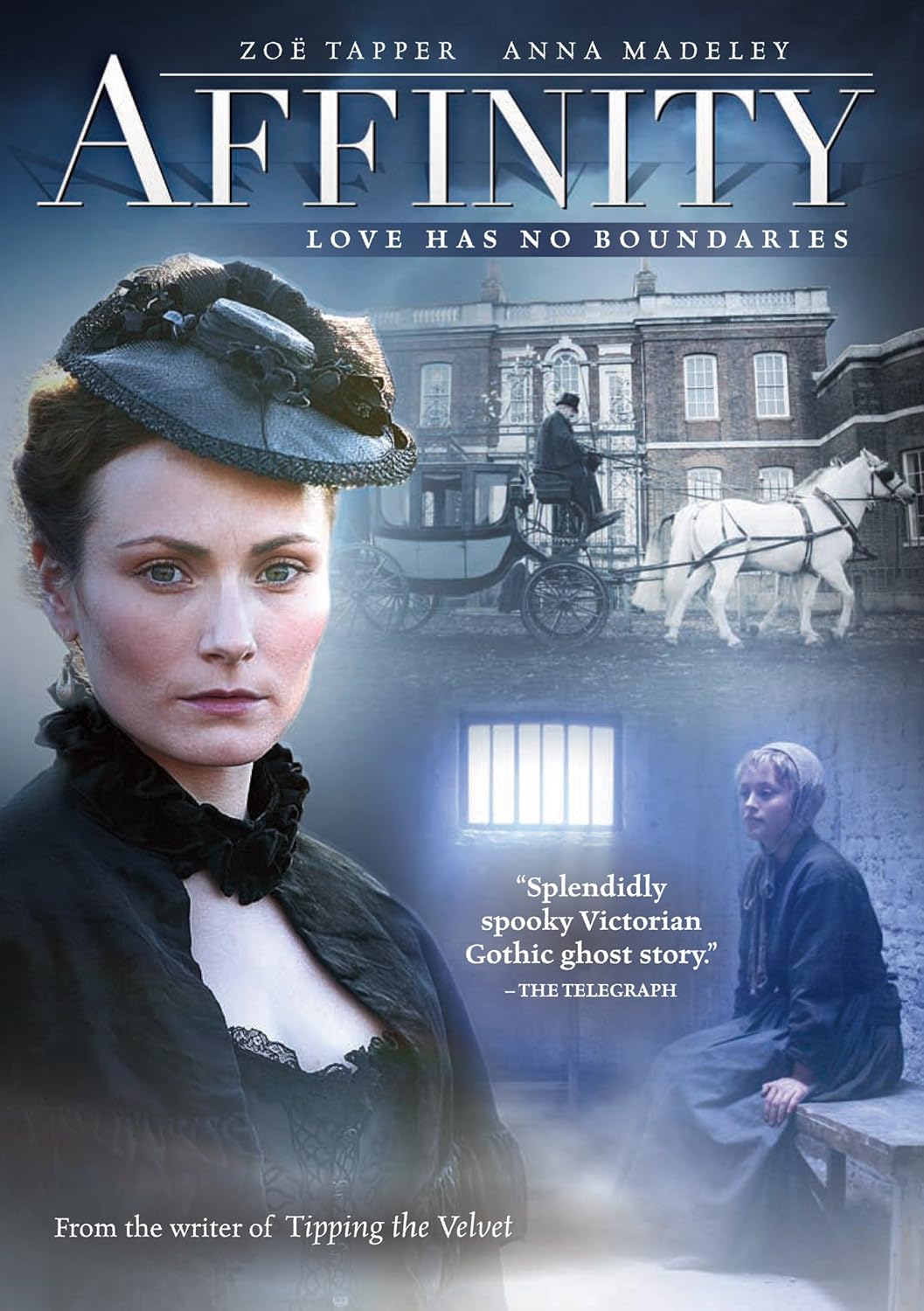
Affinity Shows Us Two Very Different Women in Very Different Prisons

I debated whether to bother reviewing this for Book Babe. I didn't dislike the movie. On the contrary, I was wholly engrossed in it. But it does not contain strong heroines. They are rather weak, really. One is weak in heart, lonely, a prisoner in her own home and way of life. She's a prime example of how one could have every materialistic possession, money, and title, and yet still be miserable and alone. Desperate.

She's the perfect prey and easily duped by a young prisoner, another woman, whose prison is an actual cell and perhaps, her own depravity.

I guess the prisoner's character is strong...stronger than the lady's anyway. But she too is weak to things, matters of the flesh, the heart, and overly desirous of what the lady has. Yes, material items can weaken us.

That being said, I'd like to talk about the good things in this movie: It's entertaining, suspenseful, has terrific costumes and settings (Victorian England), and shows us how very rough life in a women's prison was back in these times: their cells, their bathing process, their hair being shorn, their items being stored in drawers and riffled through by whomever wishes to, the dark rooms used for discipline.

There's a supposed spiritual theme too, as the prisoner claims that spirits speak through her. As a matter of fact, a spirit named Peter Quick is, of course!, the actual murderer...not her. *winks*

The acting was superb, as I found myself duped as well. Didn't see the results coming. Not at all.

The cons: The movie was very dark, and I don't mean in nature (which it is) but the lighting. I get London is a rather dark and foggy place at times, but everyday? The prison I expected to be dark, but the rest of it, it seemed they dimmed everything.

My last quibble...as the closing credits rolled by I found myself scratching my head and asking, "So, was Peter Quick fake? Who was that face then? Is she a spiritualist? What the hell?"

I hate being left with questions.

BUT, for those who love a suspenseful period drama, this is a great flick to get your hands on. Note: there is some very mild lesbianism--nothing but kisses. Also note, this is based on a Sarah Waters book, which I have not read.

I bought this DVD on Amazon.


Wednesday, July 2, 2014

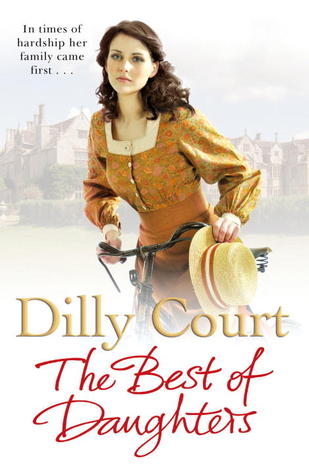
"Downton Abbey" Comes to Life on the Page in The Best of Daughters by Dilly Court

The Best of DaughtersI'm not fond of Lady Mary. I think she's uptight and makes choices for the wrong reasons, but that doesn't deter me from watching and thoroughly enjoying Downton Abbey. Just like my unsure feelings of this heroine, Daisy, didn't deter me from enjoying this novel.

It's the eve of WWI and Daisy, the daughter of wealthy parents fallen on hard times, is trying to decide just who she is. The world is changing. She must change with it.

There's only one servant throughout the story, really, so the novel is missing that strong DA feel as far as mingling with the hired help and there were no side dramas with them we could get really lost in. No Bates in jail, no Anna being raped, no housekeeper with breast cancer.

The one girl, Ruby, does get into some trouble though, the kind you'd expect back then. I won't get into it.

Ruby and Daisy also develop a friendship that starts in their suffragette days. And here is one of my big disappointments: the blurb promised me a suffragette or at least made me feel I would get some suffragette story. It's only in the beginning of the story and is such a small amount, it doesn't feel worth mentioning. I feel a bit ripped off in that aspect.

I liked Daisy sometimes, and others she just plain confused me. Perhaps that's supposed to be, as she seems confused by herself and her feelings as well. What is this strong attraction she feels to a cad? Does she believe in dividing the social classes? She says no, but her actions and snootiness often say yes.

She's afraid of the sight of blood, yet joins the First Aid Nursing Yeomanry. She passes out in the butcher shop, yet assists a girl having a stillbirth with no trouble. Um...you see my point? She confuses me.

Disappointment number two: I did not know about the FANYs and was excited that this novel brought them up. It was an all-female unit that participated in intelligence work and nursing during WWI. During the war, they drove ambulances and ran hospitals and clearing stations. I guess they were somewhat like our Red Cross.

I had hoped the book would get into this further, that we'd have actual scenes of this part of Daisy's life, but instead, the novel glosses over these bits quickly, tells in about four pages that she did this and that, readied a hospital, tended the wounded, wrote letters, remained unscathed after everyone around her contracted dysentery, drove an ambulance, etc. There was so much that could have been a story on its own, but instead the author chose to focus the actual scenes on Daisy's imagined romance with a cad, her maid's stupidity, and Daisy's engagement to her childhood friend. The FANY stuff was just told to us as quickly as possible.

...but she had glimpsed a different way of life and made new friends and found it unsettling in the extreme.

Ok. Great. What friends?

But it still an enjoyable read as Daisy grows up, deals with her snobby mother, struggles to keep her family fed and cared for, and makes decisions that are right for her in a changing time. Long review short: I wish the first half had been chopped up a lot and the last half made more of a story on its own. I could have done without that Bowman (the cad) dude entirely. Less Bowman drama, more FANYs would have made me a happy reader.

I loved the ending though, very much.

I received this via Netgalley.


Monday, June 30, 2014

Small Island, Even Smaller Minds, Big Dreams

"This island is too small if you have big dreams and without dreams, we are nothing."

I did not read the book. I am not sure why I first passed on the book when I heard of it, but when I discovered there was a movie based on it...well, to be frank, there are millions of historical fiction books I can read, but very very few period dramas I can watch, so there you go.

In the three hours this movie played, I laughed ("I get perish in here."), cried, nodded my head in agreement, just went through every emotion possible. On the screen we see Jamaica and England both, from the pre-WWII years to the period just after. We see men fighting for the same thing, the same damn thing--freedom from tyranny and oppression--and yet on the homefront, the West Indians, the people of color cannot get their own freedom.

Hortense, Gilbert, and Michael--as Michael says--go from one small island to another, each island containing the same small minds. But they have big dreams and it's fulfilling in the end, watching these people--just when you think their lives are at rock bottom--fulfill those dreams. While left hanging about Queenie and Michael's lives, we at least know that Gilbert and Hortense find happiness.

But, gosh, is a long way there. Hortense is a really hard character to like. Her upbringing, her broken heart, perhaps has made her that way and if anyone can through to her it would the charming, funny, sweet Gilbert. While all the women in the movie were drooling over Michael--a cad who preys on lonely married women--Gilbert totally stole my heart. I was ready to jump into the TV screen, murder Hortense, and take him for myself, and yes, I'd make him the best damn fish and chips if that's what it took. LOL

I thought it was fascinating the way Jamaica was back then, how they were taught England was the motherland and they all thought everyone there was wealthy, with electricity in their homes, and doorbells...and it was sad to watch the people face the truth, that while they may adore the motherland, the motherland doesn't adore them. Hortense can't even teach in England. They get called names in the street. We see a lot of prejudice.

The only main player NOT immigrating from Jamaica is Queenie, a white married woman who married not for love, but lack of choice. And just when she feels dead inside, something comes along to make her feel alive. She faces a world of heartbreak and at times doesn't make the best of choices.

Long review short: Costumes: loved them. Issues brought up in the movie: racism, infidelity, loneliness, war, how demons are not "in" us, but "out there" (I'm not going to explain that one. It would spoil), shell shock or battle fatigue. The acting: impeccable, especially whoever it is that plays Queenie. It is a very thought-evoking movie with real issues that England faced during that time period. I felt it makes a fabulous tribute to those who immigrated from the West Indies, faced and overcame these issues, and made their dreams come true despite all the odds.

Do not let the three-hour length deter you. This one is worth your time.

I bought this DVD on PBS.


Tuesday, May 27, 2014

The Scent of Murder (Dr. Dody McCleland #3) by Felicity Young

The Scent of Murder (Dr Dody McCleland, #3)Yet another awesome installment in this series. I liked this one even more than the last. In this story, my favorite historical medical examiner is on a vacation that goes terribly awry…in the form of a set of bones, a lord up to no good with the ladies, and a workhouse where bad things are happening to poor children. It’s Dr. Dody to the rescue.

And we mustn’t forget about Pike. Her love interest, the inspector, is back, and with him he brings the early days of gun forensics/ballistics. It’s obvious to me that the author did a massive amount of research for this story and I appreciate it. I love to learn new things while being entertained and this book did not disappoint. I not only learned the early method of ballistics, but also got an eye-opening look at life in the workhouse for unprotected children.

Ms. Young doesn’t stop there though. In this installment she also tackles sexual assault and its aftereffects on the victims.

It’s history, mystery, a pinch of romance, and a dash of education in one exciting novel. And at the heart of it is an incredibly strong and admirable heroine. Please, publisher, keep this series coming, and do continue to make it available to us in the U.S., even if only on Kindle. I enjoyed this immensely. I probably don’t have to add that it is extremely well written, but there you go.

I bought this on Amazon Kindle


Tuesday, May 6, 2014

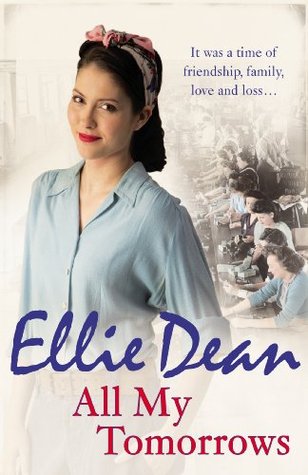
All My Tomorrows by Ellie Dean

All My TomorrowsThis novel somewhat reminds me of those British television dramas I’m so fond of. Lots of drama. It’s a good story full of (mostly) good people, people you come to care about as the story continues. The problem for me is it’s awful long and it’s nothing but drama and everyday life. Every story should have some of that, but I like a little something more in my books. I like to walk away with a good laugh or some new bit of knowledge. Though the story takes place during the war and the heroine works in a factory, there’s not a whole lot of detail about that stuff. Next to none, to be honest. Oh, they sit in shelters and they have rationing coupons, but I’m especially disappointed in the lack of factory life as that bit is what drew me to this story to begin with.

This is part of a series, but except for some references to Rosie and her problems, I never felt I was lost.

It’s a tad predictable. That has to be the second biggest downside, but it’s enjoyable enough that that’s not overly bothersome.

I was very easily able to get “lost” in the tale for four days. The heroines are Ruby and Peggy. Ruby is young and at first, I thought, “Oh no…a woman who lets herself get smacked around..ugh.” But she finds her backbone and then some. I think my favorite scene is when she stands up to Doris, but I digress. I appreciate Ruby’s story—battered wife trying to make it on her own, growing braver with each day, taking risks by up and moving from all she’s known and finding a job and a new home and opening up to people. Peggy is a strong older lady whose husband is off to war and has her own battles as her health declines and her home is bombed…but nothing…and I mean nothing stops this incredible woman from opening her home and her heart to other people, especially young girls in trouble, like Ruby.

Peggy is a fabulous role model.

We get brief looks at the other girls, such as Rita, who rides a motorbike and works as a firegirl, but you have to read their books to get their stories. This just offers teasers of sorts.

I enjoyed it, but like I said above, I just like more in my books. If this was a TV drama on BBC, I’d be all over the series, but at 500-some pages per book, I want more of the war, of the factories, of the motorbiking. More of that interesting stuff, less drama and personal problems.

I received this via Netgalley.


Monday, April 7, 2014

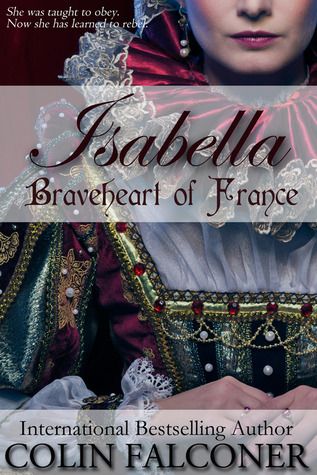
Isabella: Braveheart of France by Colin Falconer

Isabella: Braveheart of FranceThis story is infuriating. Imagine being married to a man who not only takes a lover under your nose, but also flaunts it in front of the entire court? Imagine being a queen only to watch another advise your husband and king, gather all the riches, lands, and titles for himself while spreading lies about you. Imagine watching your husband think with the wrong head not once, but twice, each time causing civil war in the nation. And yet you stand there and constantly try to placate the nobles, write letters asking for aide for your wayward, thoughtless husband, deny your own happiness...

This is my second novel about Isabella, the French princess turned English queen of the homosexual Edward. In the first one, I read,  The She-Wolf by Pamela Bennetts, she was portrayed as a bitch, a woman who used her own son to attain her own goals.

I became quite engrossed in this version of Isabella and her tumultuous marriage. I could relate to her a lot better than I could Bennetts' version. I could feel empathy and frustration for her; wanted to pull my hair out at times. I like that for once, this queen is portrayed in a manner that doesn't scream "manipulative, evil beeyotch". Instead, the author has showed us how she was treated, how she tried to be a good wife and queen, how out-of-her-control it all was. When she finally takes revenge, it's a long time coming. I mean, seriously, just how much can one woman take? Frankly, I thought it took her too long.

This novel made me see not a she-wolf, but a woman trying to take back what should have been rightfully hers all along. As the front cover says, she was taught to obey, but it's time to rebel. After all she'd been through, I was thrilled when she finally stands for herself.

Something I prefer about this story over She-Wolf is that it takes us through the Gaveston drama, not just Despenser.

I do have some quibbles and most are editorial. I became confused at times about who was good and who was bad. Take "Burstbelly" for example. Was he with them or against them? It seemed to change every time he was mentioned and I don't think the man was switching sides.

"Burstbelly died two nights ago, in Halborn....He was the last one who stood for me against the barons."

And just a few pages before it had said, "Edward summons a Parliament but Lancaster and Burstbelly--she smiles at Gaveston's description--and the other magnates refuse to attend because Gaveston is there.

So...I became a tad confused. But maybe it's just me.

I also grew tired of Isabella reminding us at the end of what seemed every other chapter that she was going to make Edward love and adore her one day, that one day she will have his heart, yada yada. That and the "I'm the daughter of the king of France" became repetitive.

The late-blooming romance with Mortimoor is weird. It's like a love/hate thing and I didn't get it.

There are some editing errors, some minor typos, some doors that open despite the fact they are locked, etc, and I noticed the errors increased in the last half of the story. At that point, even the dead come alive again--Pembroke appears speaking twice after his death and her father is mentioned as well as though he still alive. The present-tense narrative is a bit jarring at first and at times it suddenly becomes first person and my version didn't have italics, making me do a double-take sometimes. Also, I hate this new trend of not putting commas before a person's name when the speaker is addressing him. I get it's a new way, but I hate it. Loathe it. In my day, when you spoke to someone, it was, "It's not what you think, Isabella," not "It's not what you think Isabella."

I don't care if everyone is doing it now; I still hate it.

But I read this quickly. It was interesting, not too heavy on historical details. One of my quibbles with She-Wolf was that at times it began to read like a biography. Falconer doesn't go overboard with that stuff. He also doesn't waste pages and pages describing a room or a dress.

"I shall not submit like a pretty little lamb and let them make the rest of my life sewing and walking in the garden. I am a queen. I want my place at the council and at the king's side and if he will not give it to me I will force his hand. He will see that I am no coward. If he will call for rain then I will give him a tempest."

I received this in digital format from the author in exchange for an honest review.


Friday, February 21, 2014

The Shadow Princess by Mary Hart Perry

The Shadow PrincessThis was a fun book. It's not something to taken as accurate historical fiction. Queen Victoria's daughter certainly didn't run around Whitechapel searching for Jack the Ripper, but it does make a great yarn. Ms. Perry knows how to tell a tale, how to keep readers on their toes. I even had dreams of Jack the Ripper when I read this one before bed!

First of all, big applause to having an older heroine: 48, I believe, is the Queen's eldest daughter, the one who was briefly Queen of Germany (Is that right?). Austria? Something like that. She's recovering from her husband's death and in this tale, she finds herself a mission/purpose again and it turns out to be some badly-needed drive. She also realizes that she's not dead, that it's okay to move on. Very nice little side theme. I could relate to this. I totally understand the need to have a purpose, a mission.

The Jack the Ripper case was a great touch of suspense. Technically we never knew who the Ripper was, but Ms. Perry comes up with her own. Well done. A bit contrived, all of it, but as I said above, this isn't a story one reads expecting accuracy, though from the author's note, she utilized real letters and whatnot, and apparently the queen's own grandson was a suspect!

There's a romance. I will admit it sorta appears out of thin air. I had some trouble believing it, but in the end I liked their connection. Vicky falls for a detective, which back then was considered a commoner.

Something that really, really put me off however is her daughter, Sophie. What an awful girl. Horrid. A terrible snot and brat. I question why she was made this way. It was a tad OTT. I hope the next book isn't about her, if there is one. She turned my stomach. 

Ooh, but I liked that we see a softer side to Queen Victoria in this. Her parts were minimal, but she exhibits a surprising concern for those afflicted with mental illness. Just a nice touch. And I liked Vicky, the heroine. She is stubborn and takes what she wants. And never lets others boss her around. 

I received this via Netgalley.


Friday, January 17, 2014

The Forgotten Seamstress by Liz Trenow

The Forgotten SeamstressThis is a time-slip novel, going back and forth between a modern-day heroine in 2008 and the years from 1910 through the Great War and beyond. First, I'd like to say, the back and forth was seamless, well done, and non-jarring.


The modern-day heroine is dealing with so many things. She is easy to relate to as she faces problems we all face every day. She's overwhelmed and finds solace in a quilt left to her by her granny. She's facing job loss, a mother with Alzheimer's--really appreciated this story line as she battles guilt and confusion over whether to take care of her herself...but can she?-- the end of a relationship, the start of a new one, a business venture..etc.

Through an interview, we learn about Maria, the woman who made the quilt, and the story behind each one of the panels...how she came by that material, what the stitches say. It's very fascinating and makes a great story, though I confess I was put off by the interview narrative at first. It took me a while to get into this one.

But once I adjusted, I was hooked. I could not wait to find out what happened to both heroines, though the telling of the modern-day one was more interesting. I think Maria's story could have been better had a different narrative been chosen.

And--oh, how very it was to discredit a woman in them days, to throw her away in order to hide the truth. It truly is a heart-breaking tale and in the end I came to admire Maria for going strong after all she'd been through. A lesser woman would have broken long before.

I can't say this is a novel you read for any type of historical perspective. There is some time spent in the palace and all that and the Great War comes and goes, but this is mostly about entertainment, about getting lost in someone else's story and problems, one in which hopefully good triumphs evil and people try to correct their wrongs in the end.

The beginning was very slow and the ending far too predictable, but I still think this is a another great read from Liz Trenow.

I received this from Netgalley. *Four bikes. I can't get the graphic to load for some reason. LOL


Tuesday, January 14, 2014

Emma: There's No Turning Back (Emma Le Goff #2) by Linda Mitchelmore

Emma: There's No Turning BackOnce again, Ms. Mitchelmore writes in the style of Catherine Cookson, bringing us the second in a saga about Emma, a girl who has faced more hard times than many of us can imagine, from being orphaned to bullied to shunned to almost raped, this girl has been through a lot.
Only, she's no longer a girl. She's now a "married" woman, sorta.

I liked this book, but not as much as the first. In the first, Emma was just so spunky, never a doormat, always sticking up for herself. She was heroine after my own heart. In this one, she's lost something. I get that she's matured, but it's also almost as though being in love has taken some of the fight out of her and the fight in her is what I adored about her before. She still wants to run a business, she does tell Seth off sometimes, and she sure does care for those she loves. But...

I think the relationship with Seth put me off. I didn't like him in book one and didn't like him in this one either. His jealousy, his...well, his...surprise. I would have kicked him and it out of the house, not forgave and taken on the responsibility of the surprise. 

Matthew enters the story very, very late. His presence is only in form of letters and frankly, I don't see what the tizzy over them was about. Letters are harmless and it's not like Seth has always been an angel.

So I was disappointed in Emma this time, the way she handled the letters, the way she let Seth be...well, Seth. 

But the writing is solid and there's a lot going on. Sickness, crime, struggles with her business, problems with the town (AGAIN! Ugh, these people.) Some scenes really had me nodding my head, such as when Seth runs into the church for help and the folks don't really act very Christian. There are little, hidden things in the story that make you think about how we treat others.

I did not find it as exciting as book on and it did begin to drag for a while. I do have to say though that I appreciate the whole "married couple" romance here. I've often complained that there is not enough books that show you what happens after you walk down the aisle. Kudos to the author.

But I confess I wish Ms. Mitchelmore would write an alternative novel, a what if she'd ended up Matthew story. 

I received this from the publisher in exchange for an honest review.


Friday, November 15, 2013

The Boleyn Deceit (The Boleyn Trilogy #2) by Laura Andersen

The Boleyn Deceit (The Boleyn Trilogy, #2)It's very rare that a sequel is better than or even equal to its predecessor. While I enjoyed book one, the Boleyn King, I loved this one. Ms. Anderson has the perfect balance to everything. It's a "what if" story, so it cannot be based on facts. This entire series is "What if Anne Boleyn had a son and he lived and she didn't get her chopped off and there were not all those wives after her...what then?"

However, the author puts REAL people in this and it feels like we're reading history, though we're not. I recognized so many of its characters from other, historically accurate, stories: George Boleyn, the earls, Elizabeth, the little French princess. Great balance.

Also perfect blend of drama to seriousness, of description--she doesn't natter on and on about the drapes or something we may not care for. We're told what we need to know to set the scene in our minds.

The story itself kept me on my toes. There are battles, court intrigue, and at the heart of it all, Minuette and the love triangle and the mystery of who killed her friend...and I think that's still ongoing. I honestly had no clue who was going to do what next and how everyone else would react. I love that the story wasn't too predictable. And again, though she's a secondary character, I love what was done with Elizabeth. She's not the shrewd, wicked witch she's normally portrayed as in books. She's strong, cunning, and will protect her brother at all costs, and takes care of those she loves, but do not cross her!

I was able to completely immerse myself in this tale, to the point that when I set it down, I'd look around and me and wrinkle my nose. "What happened to the castle?" I'd declare.

A brief summary: King William wants Minuette, but she wants Dominic. They've been friends since childhood so not only must they be careful not to crush his trust in them, but seriously, who says no to a king? Boundaries are tested and in the background, Elizabeth is battling her feelings for Robert Dudley, who may or may not be involved in a sinister plot to throw the throne. And...there's still that unsolved murder as well as blood on Minuette's hands. And we all know that in the Royal Court, everything can be held over one's head...


Wednesday, October 30, 2013

Churchill’s Angels (Churchill's Angels #1) by Ruby Jackson

Churchill’s AngelsYou look at this cover and you think it's about a woman flying and thus will have lots of flying scenes and such... In that aspect, this is a very disappointing read. The heroine of the story only flies four times and each time it warrants a mere paragraph or two (except the last one). She doesn't join the ATA until the last 50 pages.

I thought perhaps her being a mechanic in WAAF would offer some interesting aviation stuff. No, it doesn't. There are no details about her training, testing, the planes, nothing mechanical whatsoever. What could have been incredibly interesting and insightful was just hardly mentioned. We know she's in training and did bad or good on some test or another...and that's it.

It's mostly just a girl coming of age during WWII in a small town, and then on the bases, meeting people, dealing with grief and friends dying, worrying about her brothers fighting overseas, falling in love--though you couldn't really tell--and just managing to free herself from a very clingy mother

It's about a town in England and how they get bombed constantly by the Germans on their way to London. Blackouts, fires, death. Rationing.

To be frank, there's nothing to distinguish this novel from any other WWII story out there, and I've read way more detailed novels about the ATA.

It's entertaining though and the heroine is likable, but the writing falls a tad flat. It's missing emotion. It's not a narrative that made me feel one with the characters--like I'm in their heads. I could get into the story and curious about what happened next, but I didn't think about the story or people in it when I set the book down. It doesn't stay with me.

There was also lots of odd parts where I think I was supposed to laugh, but I honestly didn't get the joke. Charlie and his daughter Charlie...Charlie says if he shouts, he won't know who's going to answer him??? HUH? If he and his daughter are both named Charlie and he shouts "Charlie", then she'd answer. Why would he answer himself? I'm sorry, but this went way over my head.

So... I think this is a good novel for anyone who wants to read about England during WWII and doesn't want to get bogged down in historical details. But it's more life on the homefront than what the ATA was like.

Funny moment I did understand and laugh at:

Heroine: "I can drive, and strip an engine and I've worked on an aeroplane."
WAAF recruiter: "'An me and Princess Elizabeth went riding our 'orses at the weekend. Frightfully lovely it was, an' all."

I got this on Amazon Vine.