My reviews on this blog dealing with Madame Presidentess about Victoria Woodhull and The Witch of Napoli here , show my interest in spiritualist mediums. This is why I wanted to read and review Ghost Talkers by Mary Robinette Kowal. The premise is that during WWI the British secretly utilized mediums to pass on information from recently dead soldiers to military authorities. This is an extraordinary concept. So I thought it would make for a highly unusual novel.
Ghost Talkers reflects the world wide predominance of women among spirit mediums. This doesn't mean that it's impossible for men to be mediums. There actually are male mediums shown in this novel, but mediums are usually women. The reasons are largely based on cultural traditions and gender stereotypes. Mediums must be receptive to spirits. That ability to be receptive is a strength in the context of mediumship, not a weakness. Gifted men must overcome the idea that receptivity is unmasculine in order to accept that they are mediums.
Kowal presents mediumship as a way for women to play an important role in the war. It was not the only role that women played in WWI. We know that women were nurses, ambulance drivers and espionage agents. There were also woman pilots in WWI. See Inspirational Women of World War I. Ghost Talkers does include nurses, and Kowal prominently mentions ambulance drivers in her historical note.
The women in the British medium corps are presented as strong individuals. It's mentioned that some were Afro-Caribbean immigrants. One Afro-Caribbean medium was a named minor character. Yet the main protagonist was Ginger Stuyvesant, an American whose mother was English. I ended up respecting Ginger for her courage. Her romance with British Captain Ben Hadford is very central to the plot, and her last scene with him was very moving.
I give this book an A for originality. It may be a candidate for my favorite read of 2017, but it's much too early in the year to know that for certain. It would be wonderful if Mary Robinette Kowal wrote further about the women of the medium corps.
Showing posts with label World War I. Show all posts
Wednesday, January 11, 2017
Friday, July 31, 2015
The Crimson Field: Nurses Bring Scandal & Smarts to the Battlefront
It's WWI. Yea, I seem to be on a nurses in WWI kick. (I've been watching Anzac Girls too, more about that later.) A group of British nurses are treating the wounded on the front (France). We not only get to know them, but also the surgeons they work closely with, and with this group comes lots of secrets and tensions. A six-hour series, it comes on two DVDs.There's the matron, with a soft heart for her patients, but not so much at times for her volunteers. There's a huge debate over how much the volunteers should be allowed to do. There's a secret engagement, secret babies, possible love affairs. Resentment, jealousy, fear. Each episode brings up something new to think about: the trials of nursing, how very difficult it can be for a young lady in those times to see a man's body. Cowardice. Should they be shot? Not every man is cut out for war...yet should they shot for their weakness?
There's Irish/British tensions, and even more fascinating to me was the experimental procedures the surgeons perform. I'm not a medical expert, but though brief, the side story involving a wounded patient being put through a painful routine every two hours rather than losing his leg was intriguing.
While the first episode was slow and I had my doubts the series would improve, by the third episode, I was hooked. I became engrossed in everyone's lives and scandals. I found myself shouting at people, especially the wife who tells her husband she doesn't want to hear his war stories. What a shocker of an episode. I dare not say what happens, but I will say it raised a lot of emotion in me.The secret engagement turned into a shocker of epic proportions bringing the issues of treason. Right man, wrong time... I was happy with the way this resolved. It was realistic and yet could have been worse. I must say though, I am not pleased with one sidestory's resolution...Kitty. Fascinating woman with hints of a scandalous past...but yet we never get the full story. I wanted the full story there and I didn't care for her love interest. I'd have chosen the other guy.
I bought this DVD set on Amazon.
Friday, September 12, 2014
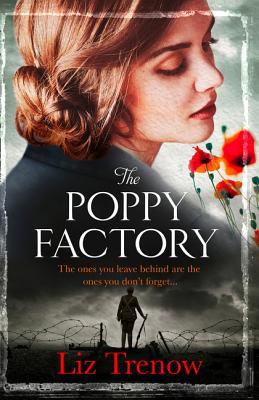
The Poppy Factory by Liz Trenow: An Emotional Tale About the Effects of Shell Shock
It's not only the visible injuries, but the invisible scars in their brains that they are having to cope with, even months after the war has ended.The Poppy Factory is a powerful tale about shell shock and how no matter which war, no matter which branch of the military, no matter what your sex, it can affect anyone. Shell shock or PTSD does not discriminate.
The story goes back and forth between a modern-day heroine who has just returned from the Afghan war and is struggling in her relationships and the day-to-day life of being a paramedic. She's overtaken with rage, drowns herself in an alcoholic haze, and can't stop the nightmares and flashbacks. Could her great-great grandmother's diary, detailing the days after WWI and her husband's own struggles with PTSD be just what Jess needs to get back on track?
I think I preferred Rose's story and character more than Jess's. I am not overly fond of the diary method though. I would def have enjoyed the book more had Rose's story been a story (like Jess's) and not a diary. I still became completely immersed in it though. What I really liked the most about Rose's tale is how we see England right after WWI, the rationing, the emergence of the flapper era, the two-minute silence, the tomb of the unknown soldier, the spiritualists taking advantage of grieving women, discrimination against pregnant women in the work field, the origins and purpose of the poppy factor... Rose's tale, despite the diary telling of it, is so emotional. Rose herself is also just amazing...
I've grown up, become more self-reliant, tougher and less sentimental. I was just a girl, and now I feel much more like a woman, capable of making my own decisions, determining my own future...
...as she carries her husband and herself through bad times, gets work as a machinist, and unlike the love interest of the modern story, stands by her husband in bad times as well as good.
![]() |
| Part of the poem by John McCrae |
But Rose...what a woman and what a story. We could all learn from her. And. ladies, do take a moment to read up on Anna Guerin and Moina Michaels, the women who helped soldiers--either by honoring their memories or providing the disabled ones with minor labor, and the story behind the poppy being associated with the Great War soldiers. It's a beautiful, real-life story and you can read it here.
I received this via Netgalley.
Tuesday, September 9, 2014
Harvard Campus During WWI: A Place of Romance, Riots, and Conflicting Emotions in The End of Innoncence

"He knows who I am and loves me for it. And I'm better for that."
I wasn't really sure what to expect from this one. I was drawn to this title because of the young lady attending Harvard (Radcliffe, actually) during WWI. Technically she can't attend Harvard--they didn't allow women--but she is permitted--invited--to attend one class on the exclusively male campus and there, she mingles with poets, playboys, and Germans, who during this time, were not quite welcome in the States anymore.
The campus is rife with hatred and students wishing to find someone to blame for the deaths of their loved ones overseas. This results in riots and beatings and needless to say, students of German origins are not safe. I found the story education in this aspect. Though I knew Germans faced hostility during this time period, their treatment on college campuses never really crossed my mind. I can't say it surprises me though. There's more than riots and rough "play" here too. There's "white collar" hatred going on as well, such as "I'll donate money to your college, but the German professor has to go..."
And witnessing all this is Helen, a young woman fresh in college, a smart lady who edits her father's books, is embarrassed by her mother's birth control pamphlets, and is falling in love for the first time after getting her head turned by a wrong fellow or two first. Though I wouldn't call her a suffragist as she doesn't seem to have strong feelings on the the subject, she isn't a doormat either. I'd say she's still finding herself as one moment she's racing a car and the next she is unable to make a man step off the hem of her skirt. But this is a confusing age to be and her characterization made sense.
I'd also just like to take a random moment here to say this is very well written. I loved the sudden surprise bursts of sarcastic humor that appeared here and there, making me chuckle and I also enjoyed how very poetic the prose is.
All that was beautiful was going. Like a garden that withdraws into the ground before a very long winter.
But I have some quibbles:
Wils seemed confused much of the time. One min he says Arnold isn't a murderer, the next he is. One minute the kaiser is ruining his life, the next he's saying he must fight for his country and won't denounce it... He seemed confused and thus confused me. But yet, at the same time, perhaps this is how it's supposed to feel. I would be confused too! Also, when in the world did a wedding occur? How did I miss that? (I read a digital galley and it's possible a scene was missing.) And later in the story why does Helen act like her and Copeland had only met in Wil's room? He was her professor too. So many little weird things.
I thought Helen's mother's "misdeeds" were quite fascinating. I wish she'd actually been a part of the story, that we'd experienced her presence.
The poetry readings and the literature discussions were--I'm embarrassed to admit this--somewhat over my head. The last 40% really bored me. It was just too much testosterone--it began to follow Riley and Wils in the trenches of war. I'm not into that. You've read one war scene, you've read them all--fear, trench foot, etc. Though I did enjoy the cease-fire despite the fact that wasn't new to me either. It was just neater this time around because Wils went look for Riley who was fighting on the opposite side and it warmed my heart reading about these Harvard students still enjoying mutual respect for each other even though they were trying to kill each other the day before...
And the ending...the last 20% was so disjointed and out of place (though I did enjoy the discussion with Copeland). Perhaps it went too far ahead into the future.
A nice read. I'll be watching for this author's next title. I received this via Netgalley.
Sunday, September 7, 2014
Edith Cavell: Nurse, Protector, Savior, POW
"Patriotism is not enough. I must have no hatred or bitterness towards anyone."I'd never heard of Edith Cavell until I found this movie on Amazon. She was a British nurse stationed in Belgium during WWI. During the German occupation, her hospital became a medical hub for German soldiers, as one was not supposed to harbor or care for French, British, any enemy of Germany. BUT she took in the wounded or even just the lost/escaped and hid them and treated them in the hospital cellar.
Between herself and others, she helped at least 200 Allied soldiers escape.
From History Channel's bio of her: "What Jeanne d’Arc has been for centuries to France," wrote one Allied journalist, "that will Edith Cavell become to the future generations of Britons."
The movie shows us all this and also how two other women helped her with her operation. (These ladies MAY have been contrived for the movie only. I do not know, but I'd like to think they existed too.) There's the feisty boat lady. I call her the boat lady because she and her husband stick the men in barrels and hide them on their boat and take them away. She's really ballsy and hands off incriminating postcards to German soldiers to mail for her. Perhaps overconfident, but it added a nice touch to the story.
![]() |
| The real Edith |
Sadly, Edith is betrayed and busted. The new military command wished to make an example of her and twisted her deeds. Instead of acting from the kindness of her heart, which she was, they managed to get her a death sentence by twisting the charges. She was accused of providing the enemy with men to fight against Germany. While some of the men she saved probably did fight against Germany, many were too wounded.
She was executed by firing squad. The movie shows us this. This is a true story so I'm not spoiling anything here.
![]() |
| Movie Edith |
My second and third complaints: 1. Perhaps the actress was told to be this way, but in my eyes, she was a robot most of the movie. There was probably only three scenes in which her character showed any emotion whatsoever. 2. I want to know what became of the other ladies. They were thrown in jail with her and then they were at her memorial service....why were they not punished too? A few weeks in jail compared to execution? I'd have liked that explained.
But to learn about this woman, I recommend watching this. I'd love to see it remade, actually.
I watched this via Amazon Prime.
Tuesday, July 29, 2014
Historical Fiction Virtual Book Tours Book Blast: Lies Told In Silence by M.K. Tod #Giveaway
Publication Date: June 29, 2014
Tod Publishing
Formats: eBook, Paperback
Genre: Historical Fiction
With knowledge gained from his role at the War Department, Henri Noisette fears that Germany may soon attack Paris. He therefore sends his wife, mother and two younger children to Beaufort, a small village in northern France. By late 1914, instead of a safe haven, Beaufort is less than twenty miles from the front.
As war unfolds, Henri’s daughter, Helene, grows up quickly and in 1917 falls in love with Edward Jamieson, a young Canadian soldier.
The novel examines love and loss, duty and sacrifice and the unexpected consequence of lies.
Praise for Lies Told in Silence
‘Dramatically depicts the horror and heartbreak of war, while also celebrating the resilience of the human spirit.’ - SHARON KAY PENMAN author of A King’s Ransom'An intricate, well-researched novel of life forever changed by WWI yet still sweet with the tender innocence of the age.’ - DONNA RUSSO MORIN author of The King’s Agent
‘M.K. Tod is a powerful new voice in the historical fiction genre.’ - AMY BRUNO Historical fiction blogger at Passages to the Past
‘An absorbing and rewarding historical read .. depicting the ruinous impact of war on human lives across the generations.’ - MARGARET EVANS PORTER author of The Proposal
‘A compelling read right up to its taut page-turning ending.’ - RICHARD LEE founder of the Historical Novel Society
Buy the Book
About the Author
M.K. Tod has enjoyed a passion for historical novels that began in her early teenage years immersed in the stories of Rosemary Sutcliff, Jean Plaidy and Georgette Heyer. During her twenties, armed with Mathematics and Computer Science degrees, she embarked on a career in technology and consulting continuing to read historical fiction in the tiny snippets of time available to working women with children to raise.In 2004, she moved to Hong Kong with her husband and no job. To keep busy Mary decided to research her grandfather’s part in the Great War. What began as an effort to understand her grandparents’ lives blossomed into a full time occupation as a writer. Her debut novel is UNRAVELLED: Two wars, Two affairs. One Marriage. LIES TOLD IN SILENCE, her second novel, is set in WWI France and tells the story of Helene Noisette who featured in Unravelled. Mary has an active blog - www.awriterofhistory.com - which discusses all aspects of historical fiction and includes author and reader interviews. Additionally, she is a book reviewer for the Historical Novel Society. Mary lives in Toronto where she is happily married with two adult children.
Connect with M.K. Tod on Facebook, Twitter, and Goodreads.
Lies Told in Silence Blog Tour & Book Blast Schedule
Monday, July 28
Review at Unshelfish
Review at Flashlight Commentary
Book Blast at Our Wolves Den
Tuesday, July 29
Review at Just One More Chapter
Book Blast at Book Babe
Book Blast at A Book Geek
Book Blast at Mel's Shelves
Wednesday, July 30
Review at Bookish
Guest Post at Just One More Chapter
Book Blast at Passages to the Past
Thursday, July 31
Book Blast at Royalty Free Fiction
Friday, August 1
Book Blast at Back Porchervations
Book Blast at So Many Books, So Little Time
Saturday, August 2
Book Blast at Mythical Books
Monday, August 4
Review & Guest Post at A Bookish Affair
Book Blast at Historical Tapestry
Tuesday, August 5
Book Blast at Layered Pages
Book Blast at Princess of Eboli
Book Blast at What Is That Book About
Wednesday, August 6
Book Blast at Literary Chanteuse
Book Blast at Caroline Wilson Writes
Thursday, August 7
Review at The Book Binder's Daughter
Book Blast at Kinx's Book Nook
Friday, August 8
Book Blast at The Maiden's Court
Monday, August 11
Review at Dianne Ascroft Blog
Book Blast at Svetlana's Reads and Views
Tuesday, August 12
Book Blast at Book Nerd
Book Blast at The Bookworm
Wednesday, August 13
Review at The Writing Desk
Thursday, August 14
Book Blast at Words and Peace
Book Blast at CelticLady's Reviews
Friday, August 15
Review at Lost in Books
Book Blast at The Mad Reviewer
Sunday, August 17
Book Blast at Brooke Blogs
Monday, August 18
Review at The Librarian Fatale
Review at Historical Fiction Notebook
Giveaway
To win a copy of M.K. Tod's Lies Told In Silence please complete the Rafflecopter giveaway form below. Giveaway is open internationally!
Giveaway ends at 11:59pm on August 18th. You must be 18 or older to enter.
Winner will be chosen via Rafflecopter on August 19th and notified via email.
Winner have 48 hours to claim prize or new winner is chosen.
Winner will be chosen via Rafflecopter on August 19th and notified via email.
Winner have 48 hours to claim prize or new winner is chosen.
a Rafflecopter giveaway
Wednesday, July 2, 2014
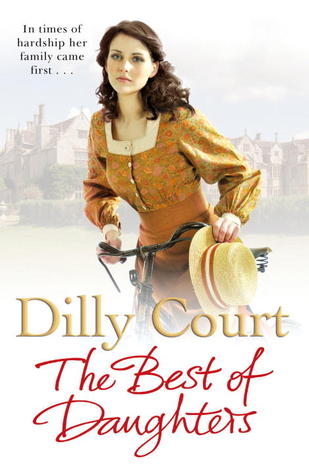
"Downton Abbey" Comes to Life on the Page in The Best of Daughters by Dilly Court
I'm not fond of Lady Mary. I think she's uptight and makes choices for the wrong reasons, but that doesn't deter me from watching and thoroughly enjoying Downton Abbey. Just like my unsure feelings of this heroine, Daisy, didn't deter me from enjoying this novel.It's the eve of WWI and Daisy, the daughter of wealthy parents fallen on hard times, is trying to decide just who she is. The world is changing. She must change with it.
There's only one servant throughout the story, really, so the novel is missing that strong DA feel as far as mingling with the hired help and there were no side dramas with them we could get really lost in. No Bates in jail, no Anna being raped, no housekeeper with breast cancer.
The one girl, Ruby, does get into some trouble though, the kind you'd expect back then. I won't get into it.
Ruby and Daisy also develop a friendship that starts in their suffragette days. And here is one of my big disappointments: the blurb promised me a suffragette or at least made me feel I would get some suffragette story. It's only in the beginning of the story and is such a small amount, it doesn't feel worth mentioning. I feel a bit ripped off in that aspect.
I liked Daisy sometimes, and others she just plain confused me. Perhaps that's supposed to be, as she seems confused by herself and her feelings as well. What is this strong attraction she feels to a cad? Does she believe in dividing the social classes? She says no, but her actions and snootiness often say yes.
She's afraid of the sight of blood, yet joins the First Aid Nursing Yeomanry. She passes out in the butcher shop, yet assists a girl having a stillbirth with no trouble. Um...you see my point? She confuses me.
Disappointment number two: I did not know about the FANYs and was excited that this novel brought them up. It was an all-female unit that participated in intelligence work and nursing during WWI. During the war, they drove ambulances and ran hospitals and clearing stations. I guess they were somewhat like our Red Cross.
I had hoped the book would get into this further, that we'd have actual scenes of this part of Daisy's life, but instead, the novel glosses over these bits quickly, tells in about four pages that she did this and that, readied a hospital, tended the wounded, wrote letters, remained unscathed after everyone around her contracted dysentery, drove an ambulance, etc. There was so much that could have been a story on its own, but instead the author chose to focus the actual scenes on Daisy's imagined romance with a cad, her maid's stupidity, and Daisy's engagement to her childhood friend. The FANY stuff was just told to us as quickly as possible.
...but she had glimpsed a different way of life and made new friends and found it unsettling in the extreme.
Ok. Great. What friends?
But it still an enjoyable read as Daisy grows up, deals with her snobby mother, struggles to keep her family fed and cared for, and makes decisions that are right for her in a changing time. Long review short: I wish the first half had been chopped up a lot and the last half made more of a story on its own. I could have done without that Bowman (the cad) dude entirely. Less Bowman drama, more FANYs would have made me a happy reader.
I loved the ending though, very much.
I received this via Netgalley.
Labels:
Book Reviews,
England,
Historical Fiction,
World War I
Friday, April 25, 2014
Refuse To Forget: A Personalization of War's Devastation
Although Refuse to Forget by John Bishop is the story of 14 year old Harry Butler, I read it because I wanted to know more about Lady Hester who Harry followed to do ambulance duty in Belgium during World War I. Was Lady Hester a courageous feminist or a thoughtless fool? In the novel, she is widely regarded as a fool. I had to ask myself how I felt about her actions.
I believe that there are just wars, but all the World War I novels that I’ve ever read have depicted it as a senseless waste that destroyed lives. The Maisie Dobbs novel, Birds of a Feather which I reviewed on The Unmasked Persona’s Reviews here dealt with the concerted effort to denigrate people who were opposed to the war. In Refuse to Forget, adolescent protagonist Harry Butler literally didn’t know any better. Due to the tide of wartime propaganda, he seemed to sincerely believe that anyone who didn't participate in the war was an inferior human being.
In my view, Lady Hester’s effort could have been motivated very differently. Her ambulance can be seen as rescuing the victims of the war. Quakers, whose faith is opposed to wars in general, have been involved in this sort of war service. Find out more in the Wikipedia article, The Friends' Ambulance Unit. It’s important to point out, however, that the FAS was officially sanctioned while Lady Hester’s ambulance wasn’t sanctioned at all. It’s clear to me that the reason why Lady Hester didn’t get official support was because of attitudes toward women during this period. Feminism is definitely a sub-theme in this book.
I consider Refuse to Forget to be a sad commentary on World War I and the society that perpetuated it. It is well-written and well-characterized. I just wish that a woman like Lady Hester had been born into an environment where she could have accomplished something significant. Perhaps John Bishop intends to tell his readers that World War I wasted the potential of both the men and women of that generation. For me, he was preaching to the choir. Yet I appreciated his message.
I received this from the publisher in exchange for an honest review.
Subscribe to:
Posts (Atom)


_1.jpg)