Showing posts with label Young Adult. Show all posts

Saturday, February 22, 2020

Silhouette of a Sparrow: YA Lesbian Historical Novel About Following Dreams

I don't know what led me to Silhouette of a Sparrow, the only YA novel by children's fiction writer, Molly Beth Griffin. It is a book that I needed to read.  So whatever the source was, I'm grateful to have discovered it.


I must have been drawn to this book by the cover which is quite extraordinary resembling some prehistorical image of a bird woman rooted in nature.  Then I must have read the description which identified it as taking place in the Roaring 1920's, a favorite period of mine which began exactly a hundred years ago.  The fact that Garnet Richardson, the 16 year old female protagonist, loves birds and wants to become an ornithologist made the novel seem unusual and intriguing.  This aspect of the book also was appealing to me as someone who is concerned about the non-human species with which we share our planet.

It belongs on this blog because there are strong women who assist Garnet in recognizing that she has the right to claim a future for herself.

The most significant of these women is 18 year old Isabella, the courageous dance hall performer labeled as a "harlot".  Isabella knew that she had to dance, and that if she had to break society's rules to do that, so be it.

Other women who helped to change the way Garnet thought about her life were Miss Maple, her summer employer, and her unconventional Aunt Rachel who never actually appears in the narrative.  Both of them served as examples that caused Garnet to realize that a woman could choose not to marry.

This is also a lesbian romance, but not one with a traditional HEA ending. I felt that the relationship between Garnet and Isabella had emotional intensity despite its brevity.  Would they ever come back together?  It's a possibility.  The future of these fictional characters is unknown unless Molly Beth Griffin chooses to revisit their lives in another book. Without that sequel, Garnet and Isabella remain frozen for us at the point where the author left them behind in the summer of 1926.

The advantage of never advancing this narrative beyond 1926 is that Garnet can retain the optimism for which the Roaring Twenties are known in order to inspire other readers of Silhouette of a Sparrow as I have been. 


Saturday, December 31, 2016

Sometimes You Must Be Broken to Realize You're Lucky: Lucky Broken Girl by @ruthbehar

Lucky Broken GirlA very engrossing, thought-evoking read. Ruthie comes from Cuba (It's the 1960s). Her family has been chasing the dream of freedom for generations, starting with her grandparents, who fled Poland and Jewish persecution, only to have to flee Castro's reign. This little girl faces a troubling time. While most girls her age are going through puberty and deciding what to wear, Ruthie gets some hard life lessons from her bed, where she lies in a full-body cast for a year.

She learns what being smart is, sees the sacrifices her mother makes, develops patience, acceptance, and most of all, learns how to overcome fear...or well, better said, how to master it, as the fear doesn't really go away. You just push it aside and do.

As Ruthie says at one point in the story...you don't realize how many wonderful people you're surrounded by until something bad happens.

There is so much to learn and take away from this novel. My favorite lesson was about perspective. About how you just have to move your bed to face the window and see things differently. I'll remember this lesson always.

Terrific book, writing, story. It's not just about a family of Jewish Cuban immigrants; it's about acceptance, sacrifices, fears, and growing up. While Ruthie's body wasn't allowed to grow during her casting; her mind certainly did. We can learn a lot from her.


Saturday, September 24, 2016

This Above All---A Girl Portrays Shakespeare's Romeo

This Above All by Lindsey Roth Culli is a  contemporary YA novel which is a potent stew of Shakespeare, gender, sexuality, religion and growing up in the American Midwest.   I received a free copy from the indie publisher, Curiosity Quills, in return for this honest review.

I have previously reviewed two other Curiosity Quills releases Alice Takes Back Wonderland, a rather wonderful fairy tale mashup and The Heartless City , an alternate history dystopia based on Dr. Jekyll and Mr. Hyde which I found compelling and enjoyable.  I expected This Above All to be more conventional compared to those previous outings.  In some ways, it was very much like a standard YA novel, but in others it very definitely wasn't.


The conventional aspect of this book was high school.   I tend to avoid YA novels that take place in high school.   Most of these have predictable character types, dynamics and plots.   This Above All contained those elements.  There were false rumors, bullying and relationships plagued by miscommunication.  Juliet was played by a stereotypical popular mean girl.  It seems that the director of this Romeo and Juliet didn't prioritize chemistry between the leads.

Sexuality was a theme, but This Above All didn't really focus on sexual relationships as is appropriate in a YA novel. While the specter of lesbianism fueled controversy, there was no actual lesbianism. Heterosexual romance played a role in the plot of this novel, but it wasn't predominant.   There was a gay character named Tony, but his life wasn't front and center either.  I read a review on Goodreads that was disappointed that we didn't find out more about Tony's family interactions.   Tony played Mercutio.  If it's true that Shakespeare needed to kill off Mercutio to prevent him from taking over the play, as is stated in this book, it's probably also true that Culli wanted to make certain that Tony didn't upstage Piper, her protagonist.

I felt that the way Piper deals with her real female identity while portraying a male role is the most interesting aspect of this book.  She initially had her doubts about whether she could or should be Romeo.  Yet once she became accustomed to the idea, she threw herself into her fictive male identity.   I wouldn't say that Piper is a transgender character.   It seemed to me that Culli wanted to show that it's possible for a girl to play with masculine gender traits in a theatrical context while still retaining a core self-concept of being female.  Piper has more in common with historical women who dressed as men to achieve career goals than with individuals who seek to transition to another gender.

Piper's fundamentalist Christian family brings religion into the mix of themes.  It is they who stir the cauldron of outrage over Piper playing a male role.  Her pastor father is shown as being sincerely concerned about Piper's spiritual well being.   As I am not a Christian myself, I wouldn't presume to make statements about the true nature of Christianity.   Over the course of the narrative, Piper changes her own views about religion.  She ponders how she can maintain a relationship with God, and comes to her own independent conclusions.   It seems to me that for Piper developing a personal approach to religion is part of the process of becoming an adult.

This Above All is a book that will cause readers to reflect on a number of topics, but I think they will also be moved by the courage of Piper and Tony, and the  chosen family they found in the cast of Romeo and Juliet.   As we have seen in the TV series, Glee, communities of performers can be powerful support systems for teens who feel like outsiders in a hostile world.  Anyone who has felt at odds with their families, or with society in general will be able to relate to Piper.


Friday, August 21, 2015

Alice Takes Back Wonderland: Explosive Fairy Tale Mashup


If  you enjoy the television series Once Upon A TimeAlice Takes Back Wonderland by David D. Hammons will have a very similar vibe.  Characters from  Wonderland, Neverland and the realm known in this book as Grimm are all mashed together quite delightfully.   I received a free copy in advance of publication from Curiosity Quills, the publisher, in return for this review.


Hammons' premise is that authors such as Lewis Carroll, James Barrie or the Grimm brothers are receiving echoes from other realities. Echoes aren't the same as accurate descriptions. The "real" stories are quite different.

Literary mashups are usually considered as the equivalent of stunt-casting for fans of the characters involved who want to know what would happen if they met.  It's akin to fanfic,  and is based on the same playful impulse. This novel is for those fans, but is also much more.

Hammons is seriously posing the question of why people want to escape through fiction.  The general assumption is that the audience for escapist literature are people who are bored by humdrum lives, but some people like the Alice in this novel (who starts out in our contemporary world) lead lives that feel like prisons.   Escapist fiction gives them hope.  It allows them to imagine that their lives could be better.

Yet what if  even your ability to dream of a better future were somehow removed? In Alice Takes Back Wonderland, Alice discovers that a dictator who has seized power in Wonderland is "taking the wonder" out of people.  This actually parallels Alice's 21st century experience.  Well-meaning adults were trying to remove her capacity to perceive other realities through modern medicine.  So Alice's battle to restore Wonderland is a war on behalf of imagination against those who consider imagination dangerous.   At one point the iconic Cheshire Cat declares "You call us mad for acting free."  Without imagination, there can be no freedom.

At first, I had an ambivalent reaction to the HEA ending because it appeared to eliminate all possibility of a sequel.   Yet it eventually occurred to me that if Alice was going to keep her happiness, she would have to fight for it.   All HEA endings are really provisional.


Monday, June 29, 2015

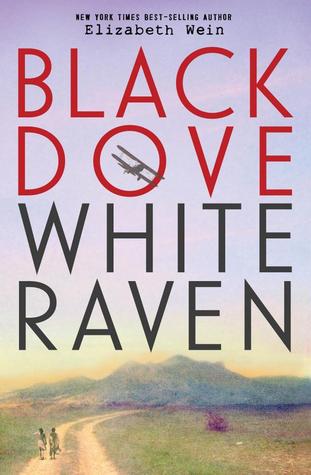
Black Dove, White Raven: Bitter Irony in a Novel of Ethiopia

I really liked Rose Under Fire by Elizabeth Wein.  Black Dove, White Raven seemed like it would be unusual because Wein's young pilots grew into maturity in Ethiopia.  It was unusual all right.  It nearly ripped my heart out.

                                                        20454599

 Rhoda Menotti and Delia Dupré were stunt pilots who performed together in the U.S. in the 1930's.  They had to perform for white only audiences because the venues were all segregated.   African-American Delia became involved with an Ethiopian pilot in Paris and gave birth to a son. She wanted her son to be raised in an environment where he wouldn't be considered inferior because of his race, and intended to take him to Ethiopia. Rhoda was offended by their segregated shows, but Delia insisted that they had to take any money they could get.  She wanted to earn enough to live in Ethiopia, so that her son could be free of American racism.

When Delia died in a tragic accident, Rhoda honored her friend's intentions for her son.  She went to live in Ethiopia with Delia's son, Teo and her own daughter, Emilia.  I admired and respected Rhoda for her loyalty to Delia's memory, and for treating Teo as part of her family.  Rhoda was a credit to her Quaker background. She used her piloting skills to help people in Ethiopia.   

 Ethiopia in the 1930's was no utopia.   There was a nightmare at the heart of Ethiopian society from which it had yet to awaken.  Teo was caught up in that nightmare.   He was trained to be a pilot and became quite accomplished.   When he was sixteen his life took a terrible turn that Delia would never have anticipated.  I wept for Teo. His mother wouldn't have even considered bringing Teo to Ethiopia  if it had occurred to her that such a thing could happen to him.

Rhoda's daughter Emilia also learned to fly as a teenager, but the drama of this book centered on Teo.  Emilia was better at navigation than at flying.  She didn't actually enjoy flying which I found disappointing.  Yet she was intelligent, resourceful and immensely loyal to Teo.

I was captured by the originality and intensity of Black Dove, White Raven  until Rhoda's husband, an Italian military pilot, did something that I considered unbelievable.  It was against military regulations and wasn't consistent with the love and concern with which he had previously treated his daughter, Emilia.  So it was both implausible and reprehensible.  The spell that Elizabeth Wein had woven was broken for me at that point.

For most of this book, I thought it was the best novel that I'd read in the first half of 2015, but the out of character behavior of Orsino Menotti, Rhoda's husband, was significant.  So I felt that I had to deduct one bike from my rating.


Thursday, May 14, 2015

The Saffron Crocus: A YA Mystery in 17th Century Venice

 photo 359ea8e9-ae78-4845-bae6-2c9f6bace292.png

Publication Date: December 13, 2014
Black Opal Books
eBook; 306p

Genre: Young Adult/Historical Mystery/Romance

Add to GR Button

Winner of the 2014 Rosemary Award for Best Historical for Young Adults.

02_The Saffron CrocusVenice, 1643. Isabella, fifteen, longs to sing in Monteverdi’s Choir, but only boys (and castrati) can do that. Her singing teacher, Margherita, introduces her to a new wonder: opera! Then Isabella finds Margherita murdered. Now people keep trying to kill Margherita’s handsome rogue of a son, Rafaele.

Was Margherita killed so someone could steal her saffron business? Or was it a disgruntled lover, as Margherita—unbeknownst to Isabella—was one of Venice’s wealthiest courtesans?

Or will Isabella and Rafaele find the answer deep in Margherita's past, buried in the Jewish Ghetto?

Isabella has to solve the mystery of the Saffron Crocus before Rafaele hangs for a murder he didn’t commit, though she fears the truth will drive her and the man she loves irrevocably apart.


Review

I have to confess that I love books set in Venice.   It's such a unique city with fascinating traditions and it played such a pivotal role in European history.    The first book that I read which took place in Venice is one of Anne Rice's best novels, Cry To Heaven.  Since The Saffron Crocus shares some of the same elements as that wonderful Rice novel, I felt as if I would be revisiting its world.   I received The Saffron Crocus free via this blog tour in return for an honest review.

This was a fast read that was mostly enjoyable.   I especially liked the heroine's voice teacher and mentor, Margherita.  I was fascinated to learn from McMahan's historical note that she was based on a historical personage.  Further research led me to discover that she was one of the first women to become an opera singer.

 I would have liked to have seen more Ladino during the scenes in the Jewish ghetto.  Ladino is a creole of Spanish and Hebrew spoken by the Jews of Spain, Portugal and Italy.  I'd heard of it before, but had never seen any example of Ladino before I read this book.

I lost my appetite for The Saffron Crocus as a result of a very predictable plot event that also had me wondering whether several of the characters were truly TSTL (Too Stupid To Live) because they should also have seen what was coming.  Oh, but the result was super-dramatic.  Look,  I love dramatic plotlines, but not a crisis that was manufactured because the characters blundered into it without thinking.  After that, the resolution seemed contrived.  I wished that I could have pushed a re-set button, so I could go back to the point where the novel was fun and I still respected the protagonists.


Buy the eBook


03_Alison McMahan AuthorAbout the Author

Alison McMahan chased footage for her documentaries through jungles in Honduras and Cambodia, favelas in Brazil and racetracks in the U.S. She brings the same sense of adventure to her award-winning books of historical mystery and romantic adventure for teens and adults. Her latest publication is The Saffron Crocus, a historical mystery for young. Murder, Mystery & Music in 17th Century Venice.

She loves hearing from readers!


Author Links

Webpage for The Saffron Crocus
AlisonMcMahanAuthor.com
AlisonMcMahan.com
Facebook
Twitter
Goodreads
Pinterest
Google+
Instagram
Tumblr

The Saffron Crocus Blog Tour & Book Blast Schedule

Monday, April 13
Book Blast at Genre Queen

Thursday, April 16
Guest Post & Giveaway at Let Them Read Books

Friday, April 17
Interview at Mythical Books

Monday, April 20
Review at Flashlight Commentary

Tuesday, April 21
Review at History From a Woman's Perspective

Wednesday, April 22
Guest Post at History From a Woman's Perspective

Tuesday, April 28
Book Blast at A Literary Vacation

Wednesday, April 29
Guest Post & Giveaway at So Many Precious Books, So Little Time

Tuesday, May 5
Review at Book Nerd

Wednesday, May 6
Review at Just One More Chapter

Thursday, May 7
Review at 100 Pages a Day

Friday, May 8
Guest Post at Just One More Chapter

Saturday, May 9
Book Blast at Romantic Historical Lovers

Tuesday, May 12
Review at The True Book Addict

Wednesday, May 13
Guest Post & Giveaway at Historical Fiction Connection

Thursday, May 14
Review at Book Babe
Guest Post at What Is That Book About

Monday, May 25
Review at Beth's Book Nook Blog

Wednesday, May 27
Book Blast at CelticLady's Reviews

Thursday, May 28
Review at The Lit Bitch
Review at Satisfaction for Insatiable Readers

Monday, June 1
Review at Broken Teepee

Tuesday, June 2
Guest Post at The Maiden's Court

Friday, June 5
Spotlight & Giveaway at Jorie Loves a Story


Friday, May 8, 2015

Risking Exposure by Jeanne Moran

 photo ccf10f32-15af-44e9-a7c1-383617ef5c06.png

Please join Jeanne Moran as she tours with HF Virtual Book Tours for Risking Exposure, from May 4-15.
Publication Date: September 2013
CreateSpace
Formats: eBook, Paperback
186 Pages
Genre: Historical Fiction/Young Adult 

Munich, 1938, Nazi Germany. War is on the horizon. A timid Hitler Youth member contracts polio. Photographs she takes of fellow polio patients are turned into propaganda, mocking people with disabilities. She is now an outsider, a target of Nazi scorn and possible persecution. Her only weapon is her camera.
This well-researched historical fiction novel unveils a seldom-seen side of the Nazi agenda. A sequel is in the works.
***REVIEW***

I thought this was a very enjoyable read. It's short, can be read in one nice lazy day. And that's not a bad thing. I get tired of door stops. Its shortness, however, does not detract from the importance of the moral it imparts, nor does it take away from the seriousness of the history within. The writing is also stellar, balancing historical facts with an engrossing story, ensuring that you won't soon forget the history you're learning.

The moral is...that being a silent bystander is just as bad as being a perpetrator. 

In this novel, we meet Sophie in 1938 Germany. She's in the Hitler Youth and she likes photography, just like her father. But whereas she used to be proud to be German, lately she's witnessing propaganda that has not feeling so proud. And when she contracts polio, the reality begins to hit much closer to home. They've gotten rid of the Jews. They've gotten rid of the church. How soon before they come and get rid of the "useless mouths"?

Sophie's family winds up in trouble and Sophie is faced with a difficult choice: run and hide, or expose the truth?

I really enjoyed reading about Sophie's battle both with her feelings and her polio. Her time in the hospital was both sad and inspiring. The author gives us an intriguing cast of characters--both adults and pre-teens. There are the confused German Youth, the mean, the silent, the helpful, the scared. The girl in the hospital doing ballet with her crutch...touched something in me. There's something for everyone in this story. While I'd suggest it be offered in every middle-school library, I also think adults will be just as moved by it all. I was.

My only complaint--and I realize there's a sequel--is the unconcluded ending. I'm not a fan of having to wait a year or so to find out what happens next. I think with how short this was that it and its sequel should have been one novel.


Praise for Risking Exposure


02_RIsking_Exposure
“Ms. Moran is opening the door to this thought: if more (maybe only a handful more) people stood up and did small things too, could some of the awful suffering of this era been averted or lessened? And more poignantly, how about today? The book ratifies the importance of small actions done with love, bravery, and purpose.”

”…the book was a beautiful collection of thoughts, historically accurate bits of data, and a easy read in terms of the flowing writing style, but deals with a lot of heavy topics in a censored way. This is definitely a great book to study, for school students, as it’s written in a simplistic yet effective writing style, and provides a brilliant coming-of-age story for all types of audiences.”

“There is so much to talk about in Sophie’s story – – what we accept as normal, what society thinks of its less able-bodied citizens, whether one person can really make a difference… we read it for our own book club discussion next month — and we’re all well past our teen-age years, so that shows the power of this small gem.”

Buy the Book

About the Author

03_Jeanne MoranJeanne Moran reads and writes stories in which unlikely heroes make a difference in their corner of the world. In her everyday life, she strives to be one of them.

For more information visit Jeanne Moran’s website.  You can also find her onFacebookPinterest, and Goodreads.


Risking Exposure Blog Tour Schedule

Monday, May 4
Review at 100 Pages a Day – Stephanie’s Book Reviews
Spotlight & Excerpt at Shelf Full of Books
Tuesday, May 5
Spotlight at Cheryl’s Book Nook
Wednesday, May 6
Review at Mel’s Shelves
Spotlight & Excerpt at Historical Fiction Connection
Thursday, May 7
Spotlight at Broken Teepee
Friday, May 8
Review at Book Babe
Monday, May 11
Review at Book Nerd
Tuesday, May 12
Review at Beth’s Book Nook Blog
Wednesday, May 13
Review at Flashlight Commentary
Spotlight at CelticLady’s Reviews
Thursday, May 14
Review at With Her Nose Stuck in a Book
Friday, May 15
Review at Genre Queen


Thursday, March 19, 2015

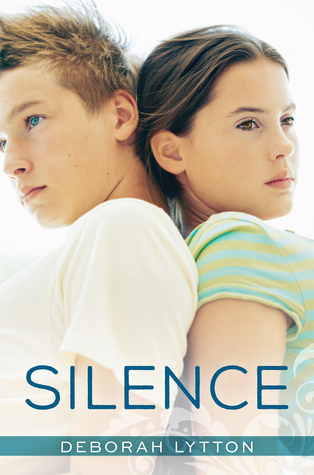
Silence: Girl with Dreams of Broadway Loses Hearing & Finds Love

Silence
Stella has big dreams, Broadway dreams, and she's been blessed with a great voice. But just when things start to look like they're really happening for her, she goes to party (I don't consider this a spoiler as I KNEW it was going to be a party) and gets hurt. She gets hurt in a manner that takes away her hearing. And while our (deaf people) voices vibrate and we can control our volume for the most part, deafness usually results in tone deafness--I know this. So naturally, Stella fears her dreams have gone down the toilet, and quickly.

And she doesn't know how to do, how to be, anyone besides who she was before.

I appreciated that story line and I could relate, even though my hearing loss was gradual, even though I was able to properly prepare myself, as much as one can for such a circumstance, I got it. The day is happening around me. Not to me.

Stella is only 15, so it's a shock to her. She wallows in self pity for much of the story. I confess this irritated me after a while. I understood it, mind you, but it still irritated me, partly because I couldn't help but see all the advantages she instantly had that certainly weren't available in my day. She instantly has captioning (I didn't get that until my teens. Don't even get me started on how difficult it was to understand the tv until then), a cell phone with text messaging (I was in my twenties), and cochlear implant(s).

And yet, she being 15, she doesn't realize all the things she's lucky to have. This made sense, but doesn't mean I didn't find her attitude a little frustrating.

I must say I appreciate the research the author did into all this. I think teenagers will learn a lot from this book and perhaps see the everyday things they take for granted.

And then a boy vows to show Stella in 17 days how she can live with her new disability, that she can still be happy and do things. And with this comes new insight and growth. I thought I knew who I was. But I was limiting myself to being one thing. Defining myself by my talent. There's more to me than that. More I can give. More I can share.

The author tackled a lot of things in this story: abuse, trauma, hearing loss, anxiety, divorce, stuttering. And her writing is beautiful. It's really too beautiful though, nearly poetic. And while this prose would be fabulous in literary fiction or poetry, it seemed out of place in a young adult book.

The tightness in my chest begins to loosen like a rosebud beginning to bloom in the sun. Petals slowly open.

I don't know many people--adults or teenagers--who sit there and think in metaphors like that. And it got to be a lot, so much that I began to skim at points.

I love that this heroine isn't just cured. Too often when deaf heroines are tackled, it seems they can't have happy endings without suddenly being cured, like you can't be deaf/HoH and have a happy ending-an insult, really. I love the cochlear implant story line but at the same time I feel a great educational opportunity was squandered, as not much time was spent on them. What does she notice after they're implanted? What's it feel like? What's in there exactly? And I'm confused as to the one bandage when she was deaf on both sides. They only go in one side? More details would have been appreciated.

The romance was a over dramatic, their feelings for each other a bit over the top, but they are fifteen and at that age, everything is over dramatic. At times, however, they said things way advanced for their ages. And to be perfectly honest, it's easier to read lips when people speak normally. I can't say I really bought the "I only understand him because he stutters" thing, because as a lipreader, I can say that would make it harder.

But all in all, it's worth the read. It should be on every teenager's to read list this year.

I received a digital ARC of this via Netgalley.


Tuesday, February 10, 2015

What Makes a True Warrior? The Truth is Revealed in Warrior of the Egyptian Kingdom by Stephanie Jefferson

Warrior of the Egyptian Kingdom"Protecting lives is what a warrior does. A warrior that is strong never takes a life if there is another choice."

This is the third book in the Princess Kandake series. PK is a Nubian warrior/princess/future queen. Her father has chosen her to rule the throne after his passing, over two brothers. The setting is historical, I'd like to say ancient Egypt times. And in this book, Kandake goes on an adventure to Egypt, a huge task at hand: determine why Egypt is asking for Nubia's help, decide if they really need it, and examine the young prince's ability to rule. Worse comes to worse, she may need to rule Egypt herself one day.

In Egypt, she must stop an uprising, heal the Pharaoh, instruct the prince, and save a young Nubian/Hebrew girl from abuse. All the while she faces Egyptian men's scorn over the fact she has so much power and also argue with idol worshipers that she is NOT Sakhmet, daughter of Ra.

I loved this story. Kandake does not disappoint. Once again she manages to solve everything in the manner of a warrior and future queen and impart some lessons as she does so. And even better, there was very little of Tabiry, her sister in this book. I really really dislike that girl.

Young readers will also get a look into Egyptian and Nubian life and customs. It's a wealth of information imparted in a most entertaining way.

Oooh, did I mention that Kandake chooses her future husband in this one? The romance is minimal and never overshadows the theme of girl power.

I noticed something in this installment, though. Lots of things are repeated over and over, such as her list of suitors and their pros and cons. It was repeated nearly word for word twice in different areas and while I realize this was weighing on her, I already knew one was soothing and one was hard working. The reason this came to annoy me is that it happened quite a bit, the repetition of things/conversations/facts. Also confusing to me was just who solved the problem of the Pharaoh's poisoning? I thought it was Kandake, who tried the poison herself, but later Naomi acts like she has solved it and everyone around her acts like she did too. Again, it felt like repetition. And why did Kandake wait so long to help the Pharaoh?

You can read my reviews of the previous two Kandake books here.

I received this from the author via Smashwords in exchange for an honest review.


Friday, January 30, 2015

The Tyrant's Daughter by J.C. Carleson

The Tyrant's DaughterI'm so far beyond yoga, or scented candles, or whatever feel-good methods people use to calm their suburban anxieties. What tidy little pill could remove the fear of my entire family being killed? What amount of medication could erase the memory of being hunted, a screaming mob outside the gates? How many long bubble baths would I have to take to forget the image of my mother staggering out of my father's study, covered in his blood?

I thought this was a very engrossing read. I was absolutely hooked from page one. The heroine, though young (this is aimed at young adults), is a strong one. She has been through so much and continues to go through much as the book continues.

Many a young lady would have caved or given up, but this one tries to not only be strong but do the right thing.

Her father, a dictator in an unnamed Arab country, has been killed. Her uncle has taken over. Her mother has taken her and her brother to refuge in America...but in exchange she must work with a possibly shady CIA agent. While her country is torn apart and her home life not much better, Laila also must deal with a new country, new rules, new school, new friends. As we follow Laila, we see American high school in a new light. People making light of bomb threats. People blissfully ignorant of war across the world, of real bombs, of loss.

And then she gets drawn into drama involving her country that she doesn't want to be involved in...just as she gets to enjoying the freedoms American life provides a young woman...sorta. See, she's always torn, and we witness this many times through how she feel at a dance, for example. She discovers the power her body can have, yet at the same time she feels self conscious showing a bit of leg.

Laila must do what she feels is right, even if it means hurting her family or walking away from friends and though in the end I hated her decision, I admired that she had the guts to do it. She made up her mind and followed through, stuck to it.

The author notes are very enlightening. If you didn't know much about Arab Spring before, you'll understand much better after reading this novel. Something else I liked was how this book showed us that...even the most unlikable of people, such as dictators, are capable of loving their children and being loved in return. And yes, we can still love our parents and yet hate who they are to others.

I highly recommend this. I am merely unsatisfied with the ending though. It was too unconcluded for me and the conclusion I felt I was possibly reading didn't seem right.

I received this via Netgalley.


Thursday, January 22, 2015

A Girl Who Can See the Ghosts That Were murdered by a Serial Killer - The Ghost Files by Apryl Baker

I picked up the first book in this series for 3 reasons. One, I just signed with the publisher and I wanted to check out some of their books. Two, it looked different and I needed a little change. Three, it was FREE. Who doesn't like free?

I loved this book. It sucked me in and I had to find out what happened. The heroine of the story, Mattie, is a foster kid who can see ghosts. After a near death experience as a child (her mom tried to kill her by stabbing), she has the ability to see ghosts, but she pretends they aren't there until her foster sister comes to her.

No one wants to believe her when she tells people her sister has been kidnapped because the girl has run away from foster homes before. One adult officer named Dan does believe Mattie, and together they begin to solve the crime of what happened to her foster sister and the other kids that have been coming to her. Turns out, there is a serial killer on the loose.

This is a young adult book and there is no romance in it. There is a lot of suspense, and you'll be flipping the pages to see what comes next. I will say, I had a pretty good idea who the killer was from the beginning. It could be that I'm a writer myself, so I can get into an authors head and know where they are going. The book is being made into a movie and I can see why. The author, Apryl Baker, tells a very good story. Her writing flows well. I will definitely be picking up the next in the series to see what kind of adventure Mattie has next.

Lacey's Rating:


About The Book:

Cherry blossom lipstick: check
Smokey eyes: check
Skinny jeans: check
Dead kid in the mirror: check

For sixteen year old Mattie Hathaway, this is her normal everyday routine. She’s been able to see ghosts since her mother tried to murder her when she was five years old. No way does she want anyone to know she can talk to spooks. Being a foster kid is hard enough without being labeled a freak too.

Normally, she just ignores the ghosts and they go away. That is until she see’s the ghost of her foster sister… Sally.

Everyone thinks Sally’s just another runaway, but Mattie knows the truth—she’s dead. Murdered. Mattie feels like she has to help Sally, but she can’t do it alone. Against her better judgment, she teams up with a young policeman, Officer Dan, and together they set out to discover the real truth behind Sally’s disappearance.

Only to find out she’s dealing with a much bigger problem, a serial killer, and she may be the next victim…

Will Mattie be able to find out the truth before the killer finds her?

Tuesday, December 30, 2014

Violins of Autumn by Amy McAuley

All I have to do is drop into a foreign country, aid and train members of the ever-growing Resistance movement, sabotage railways, travel the country on a bicycle while concealing top-secret information, blow things up, and try not to get killed.

Violins of Autumn
That sounds pretty exciting, right? Sounds like a story I should love. Truth is, despite dedicating three days to it, I couldn't make it past the 50% mark. But I paid for it, so I'm going to post my two cents.
The 411: You got a 17-year-old American female who has lied about her age, joined the British SOE, and has jumped into occupied France to save the people.

It's been done before and it's been done better. Check out Becoming Clementine by Jennifer Niven. Or for a better story of a heroine helping the French Resistance: Chateau of Secrets by Melanie Dobson.

My quibbles: I was expecting her to train members of the resistance, maybe blow up train tracks...gee, I wonder why I got that impression?...but in the first half of the story she does nothing but ride around on a bike and seem lost and do things that are just too stupid for words. I'll get to that. If there's any intense action, it comes very late in the tale.

She is 17, claims she's 22, and acts 11. That could be because this book is marketed toward the younger crowd, but still....she's supposed to be an agent/spy.

There's supposed to be some love triangle and as soon as I got a "whiff" of one of the participants (Pierre) I was rolling my eyes and dreading it. What did she see in him? He's rude, doesn't even like her, isn't remotely kind. 

There's a war on but the characters are like children playing war games. Everything is really too preposterous. In Nazi-occupied France, an American airman is NOT going to merely sit on a parachute and pretend to be picnicking, nor is he going to be able to walk the streets of Paris without anyone asking for his papers, not when every single able-bodied man in France has been sent to Germany to work in factories. His haircut and height alone will be a dead giveaway. Be real. 

And what kind of idiots sing American songs for all to hear?

And to just peddle up to a Nazi factory and began taking pictures? Is this girl for real? And get offered a tour to boot? No, no, no. The author made things way too easy for this so-called agent. Easy to the point, the story lost its seriousness.

I bought this on Amazon. It simply wasn't for me.


Tuesday, November 18, 2014

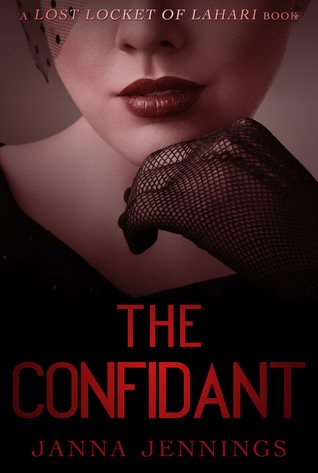
The Confidant (Lost Locket of Lahari) by Janna Jennings

The Confidant (Lost Locket of Lahari)I'm sure the author is sick of reading this, but I have to agree with previous reviewers of this title. There's far too much crammed into so few pages. It could have been a great full-length novel but makes a rushed novella. And while I realize this was originally part of a short story in an anthology, why not make it longer when you make it a stand alone?

That's not to say I didn't like it. It's an interesting tale, really. It's WWII and this young girl's mother is abducted by the Japanese in Manila. Her mother has been working with the resistance. Before she's hauled away, the mother hands over a locket containing data that really needs to get into the Allies' hands. So the heroine rushes off to the Allies, with the Japanese hot on her heels because they want the daughter in order to torture information from the mother.

It's nonstop action. Prisons, poison, dead soldiers, torture, chases, but what I didn't care for was how implausible many things are. Until the end, everything was just too easy for the heroine. I had a hard time believing some things, like Americans (including the heroine) can just don Japanese uniforms and go easily through checkpoints with their bad accents.

We go through more checkpoints with unconcerned soldiers who perform their duties, never looking in the back of the truck.

Seriously?

And she too easily escapes prison the first time. While the story mentions more than once that soldiers tend to underestimate females, I just didn't buy they were underestimating her this much, especially in light of their knowledge of her mother.

So not bad. It's short, quick, implausible, but it's entertaining and you can't help but like the brave heroine.

I received this via Netgalley.


Friday, October 31, 2014

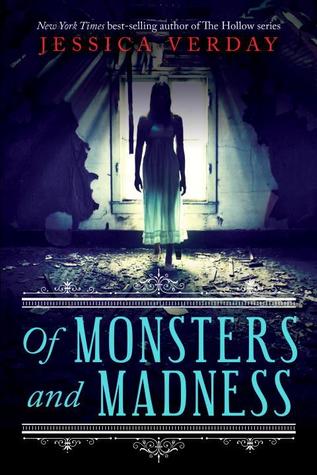
Of Monsters and Madness by Jessica Verday: An Edgar Allan Poe Twist on the Classic Jekyll & Hide

Of Monsters and MadnessI thought this would be a perfect Halloween book. It's spooky and Gothic as it follows a young heroine in a household of secrets. Fresh off the boat from Siam, Annabel is thrust into a new home and life that isn't what she expected. Her father has a mysterious illness and a horrible temper. His assistants come and go at strange hours dragging burlap sacks--one is horrid; one steals her heart. There's an angry tutor blackmailing her father over who-knows-what, and a murderer on the loose.

I like the heroine and her narrative, though I thought it could have been told in a much scarier manner. (I guess this is complaint one. I wasn't scared. What should have come across as spine-tingling somehow fell flat.) She wants to be a doctor despite her father's protests and doesn't see herself as better than anyone else. There's a mystery attached to her too, her throat. And we never get all the answers. I didn't realize this, but this is apparently the first of a series. It must be as it leaves us hanging.

And that is compliant two. I hate being left hanging. That's why I don't usually read a lot of series, not unless they're mysteries in which a case is upon and shut with the book and a new case begins with the next.

And despite the heroine's feminist leanings, she comes off a bit weak in the end. I liked her, would like to know what happens to her, but there was something lacking.

And the end...it glosses over two apparently extremely exciting weeks. It goes from a house nearly burning down and a tragic death to just flying over two weeks in which apparently something drastic happens to her father. (I'm not revealing what to avoid spoiling). But I am perturbed, because what happens to her father actually sounds kind of exciting and despite the fact there's a murderer on the loose and all that, the book lacked excitement. As I said above, something got lost in the telling.

I think the idea was great. Edgar is Hyde. Allan is Jekyll. Allan cannot write dark stuff without Edgar's nasty experiences. There was apparently a period of time in which the real Poe was in Philly and the author is just making this up to fill in the blanks. It's a good idea. It just fell flat in the end. The cover and title promises a fright, but I wasn't frightened. I did like the fact that the story wasn't predictable though. I had no clue how it was going to end.

But in a way, it didn't end. Hm.

I received this via Amazon Vine.


Friday, October 10, 2014

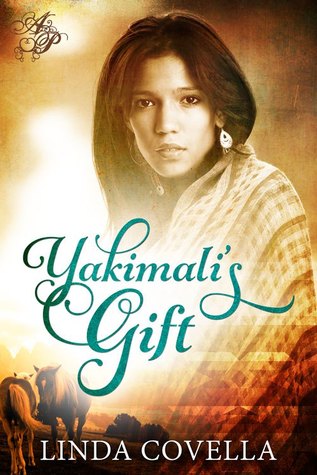
Yakimali's Gift: the Gift of Truth and Acceptance #GIVEAWAY


 photo e810eb00-70af-4106-81a8-b989005525d0.png

I love it when a moral appears within a story, or food for thought, and this novel gives one a lot to think about. Within the pages, there's a theme of acceptance. Accept yourself and others for who you/they are. Don't try to change people and don't try to change yourself for others. Fernanda, the heroine, is a girl who must realize this and also must learn to accept not just one, but both cultures she comes from. She half Spaniard, half Pima Indian. Why is one considered better than the other? It shouldn't be...

And her gift is a gift of truth. What begins as a trek across Mexico into California with a large group of settlers becomes a journey to find the truth, about herself and her Pima history.

Yakimali's GiftThe trek itself was fascinating. The settlers face all kinds of hardship as they ride mules and horses across the desert and up into the mountains and across rivers. Along the way they face water shortage, freezing-cold temperatures, starving animals, and meet a variety of friendly Native American tribes. I really enjoyed this part, seeing how the Yumas and Pimas interacted with settlers, learning about their dress, discovering their troubles with the missions. It brought up another good question/food for thought: when does organized religion become a form of slavery?

Obviously, I got very wrapped up in this story and it evoked a lot of ponderings. I appreciate stories that do that and Ms. Covella gets a huge thumb's up from me.

Fernanda is a young woman with typical young-woman emotions: insecurity, selfishness, jealousy, oppression. She's confused about her heritage, about what's expected of her vs what she wants to be. She has a huge load placed upon her shoulders and must care for a family long before she's ready. The fact she faces all this while on this excruciating journey is admirable. At times, I didn't care for her actions, but in the end, she "grows up" and realizes her mistakes and attempts to change them. I really like this heroine.

The only thing I didn't care for is the love triangle. It was necessary to the story but at times was just kinda juvenile. But this is a young adult story, so it's to be expected. It just went on too long for me.

Much thanks to Historical Fiction Virtual Book Tours for a digital galley.


***

It’s 1775 in Mexico, New Spain, and 15-year-old Fernanda Marquina, half Pima Indian and half Spanish, can’t seem to live up to her mother’s expectations or fit into the limited female roles of her culture. While she tends her garden, matches wits with buyers and sellers at the weekly market, and avoids Mama’s lectures and the demands of Nicolas, the handsome soldier pursuing her, Fernanda grabs any opportunity to ride the horses she loves, racing across the desert, dreaming of adventure in faraway lands.
But when a tragic accident presents her with the adventure she longed for, it’s at a greater cost than she could have ever imagined. With her family, Fernanda joins Juan Bautista de Anza’s historic colonization expedition to California.
On the arduous four-month journey, Fernanda makes friends with Feliciana, the young widow Fernanda can entrust with her deepest thoughts; Gloria, who becomes the sister Fernanda always wished for; and Gloria’s handsome brother Miguel, gentle one moment, angry the next and, like Fernanda, a mestizo–half Indian and half Spanish. As Fernanda penetrates Miguel’s layers of hidden feelings, she’s torn between him and Nicolas, who has joined the journey in the ranks of Anza’s soldiers and whose plans include marrying Fernanda when they reach California.
But propelling Fernanda along the journey is her search for Mama’s Pima Indian past, a past Mama refused to talk about, a past with secrets that Fernanda is determined to learn. The truths she discovers will change the way she sees her ancestry, her family, and herself.

Buy the Book


About the Author03_Linda Covella

Linda Covella’s varied job experience and education (associate degrees in art, business and mechanical drafting & design, a BS degree in Manufacturing Management) have led her down many paths and enriched her life experiences. But one thing she never strayed from is her love of writing.
A writer for over 30 years, her first official publication was a restaurant review column in a local newspaper, and as a freelance writer, she continued to publish numerous articles in a variety of publications. But when she published articles for children’s magazines (“Games and Toys in Ancient Rome” and “Traveling the Tokaido in 17th Century Japan,” in Learning Through History magazine, and “Barry’s Very Grown Up Day” in Zootles magazine), she realized she’d found her niche: writing for children. She wants to share with kids and teens her love of books: the worlds they open, the things they teach, the feelings they express.
Yakimali’s Gift, a historical novel for young adults published by Astraea Press, and middle grade paranormal The Castle Blues Quake published by Beau Coup Publishing are her first novels.
No matter what new paths she may travel down, she sees her writing as a lifelong joy and commitment.
She’s a member of Society of Children’s Book Writers and Illustrators (SCBWI). She blogs about writing on herwebsite and blog. You can also connect with her on Facebook and Twitter.

Yakimali’s Gift Blog Tour Schedule

Monday, October 6
Tuesday, October 7
Spotlight at Susan Heim on Writing
Wednesday, October 8
Spotlight & Giveaway at Let Them Read Books
Thursday, October 9
Review & Interview at Back Porchervations
Spotlight & Giveaway at Peeking Between the Pages
Friday, October 10
Review at Book Babe
Spotlight & Excerpt at Shelf Full of Books
***

GIVEAWAY 


To win one of three $10 Amazon Gift Cards please complete the Rafflecopter giveaway form below. Giveaway is open to US residents only.


Giveaway ends at 11:59pm on October 10th. You must be 18 or older to enter.

Winner will be chosen via Rafflecopter on October 11th and notified via email.

Winner have 48 hours to claim prize or new winner is chosen.
a Rafflecopter giveaway